• Welcome to the Internet Infidels Discussion Board.

“Revolution in Thought: A new look at determinism and free will"

You sad it is too fast to be measured, but it is easily measured
I said that they can't tell whether we see in real time on Earth because they will use the fact that light travels and conclude that we must be seeing in delayed time even though it appears instant because of how fast light travels.
If real time means witho0ut delay than that can not be.
It can be without delay if you are coming from the perspective of efferent vision.
Again. If light is necessary condition fo0r seeing and there is a finite speed, then there can be no instant or real time vision as you believe.
That is why he purposely gave the example regarding the Sun being turned on at noon. We would be unable to see each other because light would not be here for another 8.5 minutes, but we would see the Sun even though it's 93 million miles away due to the fact that it's not the distance that counts here. It's luminosity and size. Because the Sun would meet the conditions for sight, we would see it instantly, but again, we would not see each other because the conditions for sight would not have been met, even though we may be only ten feet from each other.
There are inherent delays in the eye, nerves, and the brain.

Way back you said light does not convey the image. The image is already at the eye when a light is turned on. Is that still your position?
Light is essential for sight, but without the object being within our field of view (i.e., enough luminosity to be seen with the naked eye or a telescope, and large enough to be seen from our location), we would not see it, nor would we receive an image of the object in the light that has traveled through space/time.
 
Last edited:
we would see the Sun even though it's 93 million miles away due to the fact that it's not the distance that counts here. It's luminosity and size.
As the term luminosity is ordinarily employed, distance is most definitely relevant to the matter of visibility.

Please explain so as to distinguish your use of the term luminosity, because, as ordinarily employed, luminosity alone is not sufficient to account for visibility. For that matter, the luminosity and size factors (along with the "field of view" consideration) together are not sufficient to account for the if or the when of a luminosity resulting in visibility.
 
we would see the Sun even though it's 93 million miles away due to the fact that it's not the distance that counts here. It's luminosity and size.
As the term luminosity is ordinarily employed, distance is most definitely relevant to the matter of visibility.
It's not so much distance in this account of vision but size.
Please explain so as to distinguish your use of the term luminosity, because, as ordinarily employed, luminosity alone is not sufficient to account for visibility. For that matter, the luminosity and size factors (along with the "field of view" consideration) together are not sufficient to account for the if or the when of a luminosity resulting in visibility.
Luminosity just means that the object is reflecting or emitting enough energy in each photon to allow the object to be seen by a telescope or the naked eye. The point being made (if Lessans is correct) is that we are not receiving an image of the object as it travels to us, but we are seeing the actual object in real time because it meets the conditions for sight. That is what makes any object in the external world capable of being seen. Obviously, if a celestial object is too far away from us, or too small to be seen by a telescope or the naked eye, it will be outside of our field of view, and no amount of luminosity will grant us visibility.
 
Wrongamundo Pg

Pg illustrates the problem of trying to describe physical phenomena with words, and the problem Lessans would have had. She has imagination and creativity, she is taking what she has heard about light and synthesize something, albeit wrong. Which is Lessans' book,


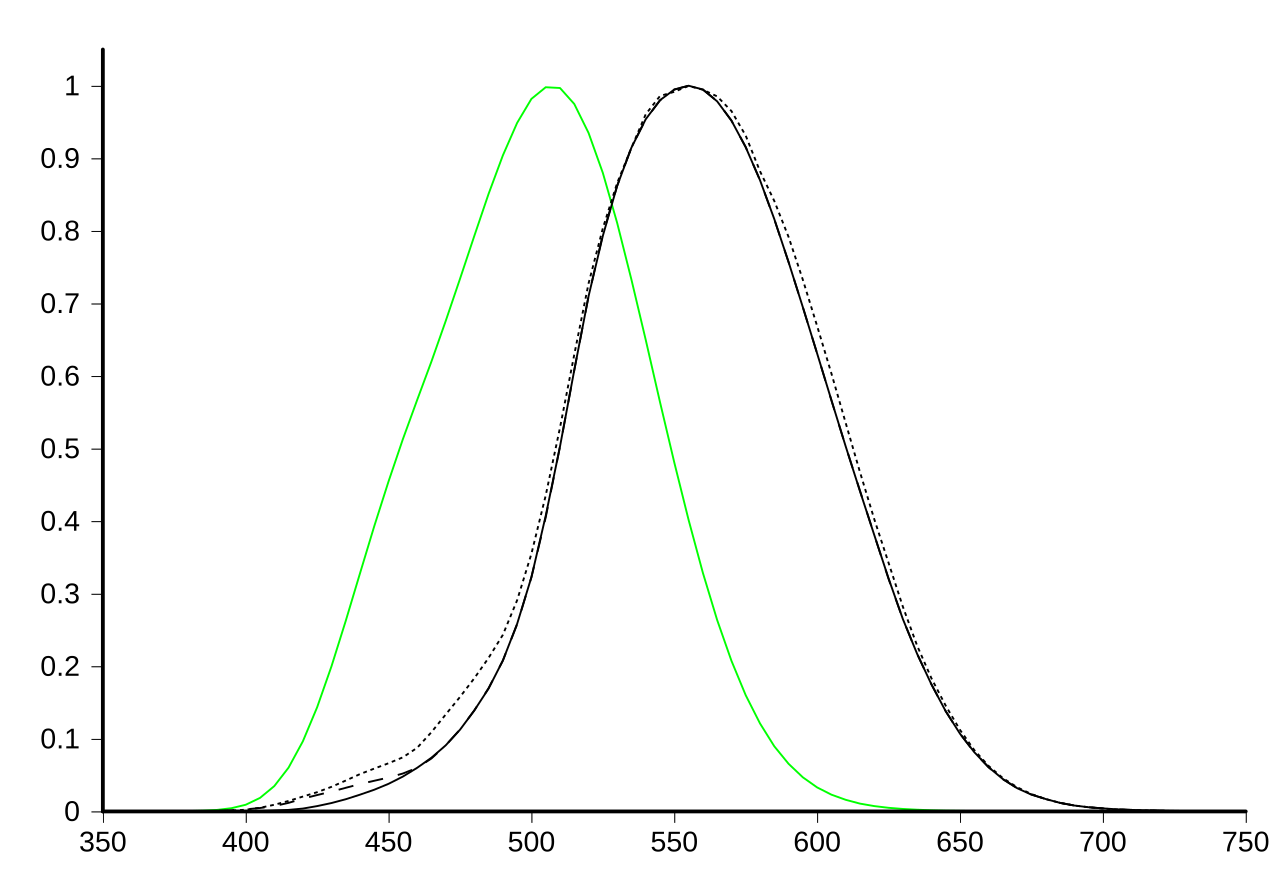
Luminosity is an absolute measure of radiated electromagnetic energy per unit time, and is synonymous with the radiant power emitted by a light-emitting object.[1][2] In astronomy, luminosity is the total amount of electromagnetic energy emitted per unit of time by a star, galaxy, or other astronomical objects.[3][4]


Candela (symbol: cd) is the SI unit of luminous intensity. It measures the luminous power per unit solid angle emitted in a particular direction. A common wax candle has a luminous intensity of roughly 1 cd.
Energy of any kind is Joules, energy/second is power is Watts.

Pg uses the term energy with zero comprehsion.
 
You sad it is too fast to be measured, but it is easily measured
I said that they can't tell whether we see in real time on Earth because they will use the fact that light travels and conclude that we must be seeing in delayed time even though it appears instant because of how fast light travels.
If real time means witho0ut delay than that can not be.
It can be without delay if you are coming from the perspective of efferent vision.
Again. If light is necessary condition fo0r seeing and there is a finite speed, then there can be no instant or real time vision as you believe.
That is why he purposely gave the example regarding the Sun being turned on at noon. We would be unable to see each other because light would not be here for another 8.5 minutes, but we would see the Sun even though it's 93 million miles away due to the fact that it's not the distance that counts here. It's luminosity and size. Because the Sun would meet the conditions for sight, we would see it instantly, but again, we would not see each other because the conditions for sight would not have been met, even though we may be only ten feet from each other.
There are inherent delays in the eye, nerves, and the brain.

Way back you said light does not convey the image. The image is already at the eye when a light is turned on. Is that still your position?
Light is essential for sight, but without the object being within our field of view (i.e., enough luminosity to be seen with the naked eye or a telescope, and large enough to be seen from our location), we would not see it, nor would we receive an image of the object in the light that has traveled through space/time.
Nonsense. You keep using terms which you clearly do not comprehend.

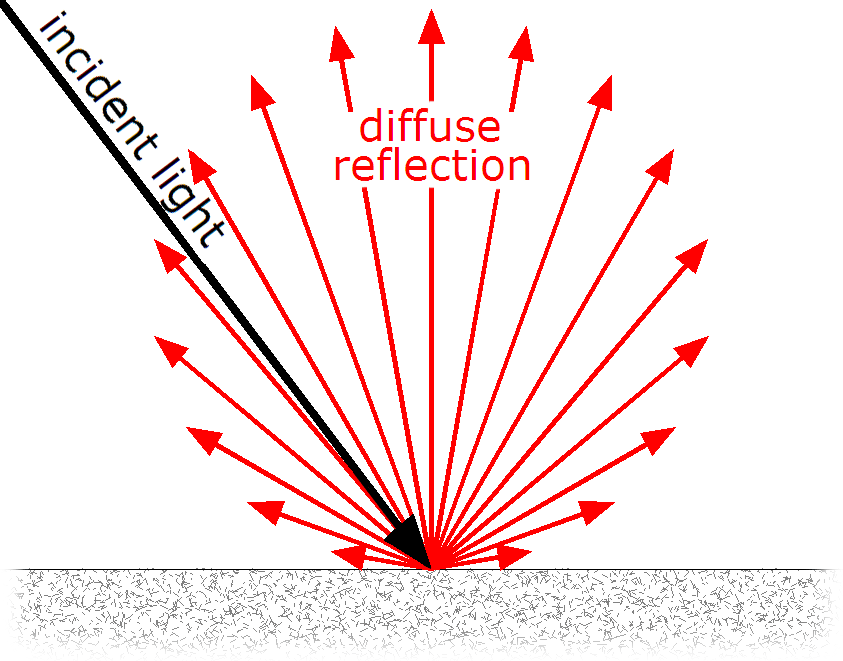
How about a Lamertian surfaces?

Lambertian reflectance is the property that defines an ideal "matte" or diffusely reflecting surface. The apparent brightness of a Lambertian surface to an observer is the same regardless of the observer's angle of view.[1] More precisely, the reflected radiant intensity obeys Lambert's cosine law, which makes the reflected radiance the same in all directions. Lambertian reflectance is named after Johann Heinrich Lambert, who introduced the concept of perfect diffusion in his 1760 book Photometria.
 
You sad it is too fast to be measured, but it is easily measured
I said that they can't tell whether we see in real time on Earth because they will use the fact that light travels and conclude that we must be seeing in delayed time even though it appears instant because of how fast light travels.
If real time means witho0ut delay than that can not be.
It can be without delay if you are coming from the perspective of efferent vision.
Again. If light is necessary condition fo0r seeing and there is a finite speed, then there can be no instant or real time vision as you believe.
That is why he purposely gave the example regarding the Sun being turned on at noon. We would be unable to see each other because light would not be here for another 8.5 minutes, but we would see the Sun even though it's 93 million miles away due to the fact that it's not the distance that counts here. It's luminosity and size. Because the Sun would meet the conditions for sight, we would see it instantly, but again, we would not see each other because the conditions for sight would not have been met, even though we may be only ten feet from each other.
There are inherent delays in the eye, nerves, and the brain.

Way back you said light does not convey the image. The image is already at the eye when a light is turned on. Is that still your position?
Light is essential for sight, but without the object being within our field of view (i.e., enough luminosity to be seen with the naked eye or a telescope, and large enough to be seen from our location), we would not see it, nor would we receive an image of the object in the light that has traveled through space/time.
Nonsense. You keep using terms which you clearly do not comprehend.

How about a Lamertian surfaces?

Lambertian reflectance is the property that defines an ideal "matte" or diffusely reflecting surface. The apparent brightness of a Lambertian surface to an observer is the same regardless of the observer's angle of view.[1] More precisely, the reflected radiant intensity obeys Lambert's cosine law, which makes the reflected radiance the same in all directions. Lambertian reflectance is named after Johann Heinrich Lambert, who introduced the concept of perfect diffusion in his 1760 book Photometria.
What does "matte" or "diffusely reflecting surfaces" have to do with the direction we see? Whether light is bringing an image to us in delayed time, or whether we see an object in real time, doesn't change the properties of a surface, which, according to Johann Heinrich Lambert, would make the reflected radiance the same in all directions. Who is disputing Lambert's cosine law, and how does it negate real time seeing? :confused2:
 
You sad it is too fast to be measured, but it is easily measured
I said that they can't tell whether we see in real time on Earth because they will use the fact that light travels and conclude that we must be seeing in delayed time even though it appears instant because of how fast light travels.
If real time means witho0ut delay than that can not be.
It can be without delay if you are coming from the perspective of efferent vision.
Again. If light is necessary condition fo0r seeing and there is a finite speed, then there can be no instant or real time vision as you believe.
That is why he purposely gave the example regarding the Sun being turned on at noon. We would be unable to see each other because light would not be here for another 8.5 minutes, but we would see the Sun even though it's 93 million miles away due to the fact that it's not the distance that counts here. It's luminosity and size. Because the Sun would meet the conditions for sight, we would see it instantly, but again, we would not see each other because the conditions for sight would not have been met, even though we may be only ten feet from each other.
There are inherent delays in the eye, nerves, and the brain.

Way back you said light does not convey the image. The image is already at the eye when a light is turned on. Is that still your position?
Light is essential for sight, but without the object being within our field of view (i.e., enough luminosity to be seen with the naked eye or a telescope, and large enough to be seen from our location), we would not see it, nor would we receive an image of the object in the light that has traveled through space/time.
Nonsense. You keep using terms which you clearly do not comprehend.

How about a Lamertian surfaces?

Lambertian reflectance is the property that defines an ideal "matte" or diffusely reflecting surface. The apparent brightness of a Lambertian surface to an observer is the same regardless of the observer's angle of view.[1] More precisely, the reflected radiant intensity obeys Lambert's cosine law, which makes the reflected radiance the same in all directions. Lambertian reflectance is named after Johann Heinrich Lambert, who introduced the concept of perfect diffusion in his 1760 book Photometria.
What does "matte" or "diffusely reflecting surfaces" have to do with the direction we see? Whether light is bringing an image to us in delayed time, or whether we see an object in real time, doesn't change the properties of a surface, which, according to Johann Heinrich Lambert, would make the reflected radiance the same in all directions. Who is disputing Lambert's cosine law, and how does it negate real time seeing? :confused2:
Golly, you got me. I am just making things up as I go along. I have no idea what I am talking about.

Let's see. By the quadratic inverse luminosity rule the matte surface polarizes the photons in reverse order. This allows the photons to travel beneath space-time allowing us to see the object without delay.

Any questions?
 
Luminosity just means that the object is reflecting or emitting enough energy
Luminosity in terms of energy is standard.

The point being made (if Lessans is correct) is that we are not receiving an image of the object as it travels to us
However, both your "reflecting" and your "emitting" entail traveling, and there is no traveling which is instantaneous. There is no traveling in which the leaving and the arriving occur without a time difference. There is no traveling in which there is no duration between the leaving and the arriving.

we are seeing the actual object in real time
We see it some time after the light (whether it is reflected or emitted light) left its source. This is the real time at which and in which we see it.

With what is there to disagree?

More details can be added, but you hold that "Light is essential for sight", and (I think) you agree that light travels. From that it follows inescapably that something cannot be seen without its reflected or emitted light having reached the person who sees, and that means that real time refers to the seeing and not the reflecting/emitting, because the reflecting/emitting does not occur at the same instant at the same place as the seeing occurs.

The fact that luminosity necessarily entails traveling means that it is necessarily the case that nothing about luminosity changes the fact that light cannot leave and arrive at the same time.

The fact that light is essential for sight - together with the fact that light travels - means it is necessarily the case that a thing cannot be seen before light which it reflects or emits arrives, just as a thing cannot be seen at the very same time that it reflects/emits light.

With what is there to disagree?
 
What happens when you enter a perfectly dark room, where you see nothing, and then you switch the light on?
What are you getting at DBT? You would see what is in the room. Light travels so fast, there is no way someone could prove that we see in real time. It is assumed that light brings us the image which takes a nanosecond or less to reach our eyes. This goes right back to the belief in delayed vision. This question doesn't answer anything more than what is believed to be happening.
 
What happens when you enter a perfectly dark room, where you see nothing, and then you switch the light on?
What are you getting at DBT? You would see what is in the room. Light travels so fast, there is no way someone could prove that we see in real time. It is assumed that light brings us the image which takes a nanosecond or less to reach our eyes. This goes right back to the belief in delayed vision. This question doesn't answer anything more than what is believed to be happening.

The speed of light has been measured. Now if you consider what happens when you enter a dark room and switch the light on, understanding that light has travel time, you'd understand that "real time/instant vision' is impossible.
 
Luminosity just means that the object is reflecting or emitting enough energy
Luminosity in terms of energy is standard.

The point being made (if Lessans is correct) is that we are not receiving an image of the object as it travels to us
However, both your "reflecting" and your "emitting" entail traveling, and there is no traveling which is instantaneous. There is no traveling in which the leaving and the arriving occur without a time difference. There is no traveling in which there is no duration between the leaving and the arriving.

we are seeing the actual object in real time
We see it some time after the light (whether it is reflected or emitted light) left its source. This is the real time at which and in which we see it.

With what is there to disagree?
If he is right, this version of sight does not involve time. Here is an excerpt again. I can't do better than him in explaining it.

“I am not that positive, but this is what I was taught.”

Once again, certain facts have been confused, and all the reasoning except for light traveling at a high rate of speed is completely fallacious. Scientists made the assumption that since the eyes are a sense organ, it followed that light must reflect an electric image of everything it touches, which then travels through space and is received by the brain through the eyes. What they tried to make us believe is that if it takes 8 minutes for the light from the sun to reach us, it would take hundreds of years for the reflection of Columbus to reach Rigel, even with a powerful telescope. But why would they need a telescope?

They reasoned that since it takes longer for the sound from an airplane to reach us when 15,000 feet away than when 5000; and since it takes longer for light to reach us the farther it is away when starting its journey, light and sound must function alike in other respects, which is false, although it is true that the farther away we are from the source of sound, the fainter it becomes, as light becomes dimmer when its source is farther away. If the sound from a plane, even though we can’t see it on a clear day, tells us it is in the sky, why can’t we see the plane if an image is being reflected towards the eye on the waves of light? The answer is very simple. An image is not being reflected. We cannot see the plane simply because the distance reduced its size to where it was impossible to see it with the naked eye, but we could see it with a telescope. We can’t see bacteria with the naked eye, either, but we can through a microscope. The actual reason we are able to see the moon is because there is enough light present, and it is large enough to be seen. The explanation as to why the sun looks to be the size of the moon, although much larger, is because it is much much farther away, which is the reason it would look like a star to someone living on a planet at the distance of Rigel. This proves conclusively that the distance between someone looking and the object seen has no relation to time because the images are not traveling toward the optic nerve on waves of light; therefore, it takes no time to see the moon, the sun, and the distant stars. To paraphrase this another way, if you could sit upon the star Rigel with a telescope powerful enough to see me writing this very moment, you would see me at the exact same time that a person sitting right next to me would, which brings us to another very interesting point. If I couldn’t see you standing right next to me because we were living in total darkness since the sun had not yet been turned on, but God was scheduled to flip the switch at 12 noon, we would be able to see the sun instantly — at that very moment — although we would not be able to see each other for 8 minutes afterwards. The sun at 12 noon would look exactly like a large star, the only difference being that in 8 minutes we would have light with which to see each other, but the stars are so far away that their light diminishes before it gets to us.


More details can be added, but you hold that "Light is essential for sight", and (I think) you agree that light travels. From that it follows inescapably that something cannot be seen without its reflected or emitted light having reached the person who sees, and that means that real time refers to the seeing and not the reflecting/emitting, because the reflecting/emitting does not occur at the same instant at the same place as the seeing occurs.
Please keep in mind that we would see the same exact thing whether in delayed or real time. We would see the object through the reflecting/emitting light. It would be exactly the same. I think everyone is trying to grasp how it would be possible to see the object without the time it takes to get to our eyes. But this account does not depend on time, as just mentioned. It doesn't matter how far away a celestial object is or how close an object is to us. What matters is that they both meet the requirements for sight, which is their brightness and size, not their distance. If the celestial object is too far away, there will be no light at our eyes that would allow us to see it. A telescope might be able to magnify the light to create a larger image of the real object, which would allow us to see it, however faint. The James Webb Space Telescope, for example, is able to see distant objects we cannot see from Earth. Whether it sees the past or the present is the million-dollar question.

A telescope primarily magnifies the light rather than the object itself. The telescope gathers light from the night sky and then uses its optics to focus and magnify that light into an image. This process allows astronomers to see faraway objects that are too dim to be seen with the naked eye. The magnification of the image is achieved through the use of lenses or mirrors, which are designed to concentrate the light and make distant objects appear closer and larger.

NASA+5

The fact that luminosity necessarily entails traveling means that it is necessarily the case that nothing about luminosity changes the fact that light cannot leave and arrive at the same time.

The fact that light is essential for sight - together with the fact that light travels - means it is necessarily the case that a thing cannot be seen before light which it reflects or emits arrives, just as a thing cannot be seen at the very same time that it reflects/emits light.

With what is there to disagree?
I hope I answered your question above. Light is present at our retina in this version of sight There is no gap where light should be. You have to think in terms of 180 degree about face in how this version works, which automatically puts the light at the retina if we can see the object. Bear in mind that distance is not a factor here. I could be right next to you and not see you because light from the Sun hasn't arrived, but I could see the Sun turned on, even though it is 93,000 miles away. That is because it would meet the requirements of brightness and size, not travel time. I know I'm repeating myself, but I don't know any other way to explain it.

 
What happens when you enter a perfectly dark room, where you see nothing, and then you switch the light on?
What are you getting at DBT? You would see what is in the room. Light travels so fast, there is no way someone could prove that we see in real time. It is assumed that light brings us the image which takes a nanosecond or less to reach our eyes. This goes right back to the belief in delayed vision. This question doesn't answer anything more than what is believed to be happening.

The speed of light has been measured. Now if you consider what happens when you enter a dark room and switch the light on, understanding that light has travel time, you'd understand that "real time/instant vision' is impossible.
No DBT, you are still thinking in terms of afferent vision. I am not disputing the speed of light, which you keep going back to.
 
You sad it is too fast to be measured, but it is easily measured
I said that they can't tell whether we see in real time on Earth because they will use the fact that light travels and conclude that we must be seeing in delayed time even though it appears instant because of how fast light travels.
If real time means witho0ut delay than that can not be.
It can be without delay if you are coming from the perspective of efferent vision.
Again. If light is necessary condition fo0r seeing and there is a finite speed, then there can be no instant or real time vision as you believe.
That is why he purposely gave the example regarding the Sun being turned on at noon. We would be unable to see each other because light would not be here for another 8.5 minutes, but we would see the Sun even though it's 93 million miles away due to the fact that it's not the distance that counts here. It's luminosity and size. Because the Sun would meet the conditions for sight, we would see it instantly, but again, we would not see each other because the conditions for sight would not have been met, even though we may be only ten feet from each other.
There are inherent delays in the eye, nerves, and the brain.

Way back you said light does not convey the image. The image is already at the eye when a light is turned on. Is that still your position?
Light is essential for sight, but without the object being within our field of view (i.e., enough luminosity to be seen with the naked eye or a telescope, and large enough to be seen from our location), we would not see it, nor would we receive an image of the object in the light that has traveled through space/time.
Nonsense. You keep using terms which you clearly do not comprehend.

How about a Lamertian surfaces?

Lambertian reflectance is the property that defines an ideal "matte" or diffusely reflecting surface. The apparent brightness of a Lambertian surface to an observer is the same regardless of the observer's angle of view.[1] More precisely, the reflected radiant intensity obeys Lambert's cosine law, which makes the reflected radiance the same in all directions. Lambertian reflectance is named after Johann Heinrich Lambert, who introduced the concept of perfect diffusion in his 1760 book Photometria.
What does "matte" or "diffusely reflecting surfaces" have to do with the direction we see? Whether light is bringing an image to us in delayed time, or whether we see an object in real time, doesn't change the properties of a surface, which, according to Johann Heinrich Lambert, would make the reflected radiance the same in all directions. Who is disputing Lambert's cosine law, and how does it negate real time seeing? :confused2:
Golly, you got me. I am just making things up as I go along. I have no idea what I am talking about.

Let's see. By the quadratic inverse luminosity rule the matte surface polarizes the photons in reverse order. This allows the photons to travel beneath space-time allowing us to see the object without delay.

Any questions?
This is getting so silly, I'm actually speechless! 😂:rofl::LOL:
 
No DBT, you are still thinking in terms of afferent vision. I am not disputing the speed of light, which you keep going back to.

That’s because the optic nerve is entirely afferent, as has been demonstrated to you again and again, and because it is both physically and logically impossible for light to take time to get to the eye but at the same time for us to see without a time delay. To say that something which is both physically and logically impossible is nevertheless true is the stupidest claim anyone has ever made. The second stupidest claim ever made is that the eye is not a sense organ.

So your father, should he ever become well known (he won’t), will have the perverse historical distinction of making the two stupidest claims in the history of the human species.
 
That is why he purposely gave the example regarding the Sun being turned on at noon. We would be unable to see each other because light would not be here for another 8.5 minutes, but we would see the Sun even though it's 93 million miles away due to the fact that it's not the distance that counts here. It's luminosity and size. Because the Sun would meet the conditions for sight, we would see it instantly, but again, we would not see each other because the conditions for sight would not have been met, even though we may be only ten feet from each other.

Yet again, @bilby gave you simple way to test this claim. Just watch the sun come up in the morning with a neighbor next to you. The sun rising is functionally indistinguishable from the sun being turned at noon. If your writer were correct, we would see the sun rising above the horizon for nearly 8.5 minutes before we would see the ground light up and see the neighbor next to us. This is not what we observe. Hence your writer is wrong Q.E.D.

Have you tried this experiment for yourself yet? If not, why not? :unsure:
 
You sad it is too fast to be measured, but it is easily measured
I said that they can't tell whether we see in real time on Earth because they will use the fact that light travels and conclude that we must be seeing in delayed time even though it appears instant because of how fast light travels.
If real time means witho0ut delay than that can not be.
It can be without delay if you are coming from the perspective of efferent vision.
Again. If light is necessary condition fo0r seeing and there is a finite speed, then there can be no instant or real time vision as you believe.
That is why he purposely gave the example regarding the Sun being turned on at noon. We would be unable to see each other because light would not be here for another 8.5 minutes, but we would see the Sun even though it's 93 million miles away due to the fact that it's not the distance that counts here. It's luminosity and size. Because the Sun would meet the conditions for sight, we would see it instantly, but again, we would not see each other because the conditions for sight would not have been met, even though we may be only ten feet from each other.
There are inherent delays in the eye, nerves, and the brain.

Way back you said light does not convey the image. The image is already at the eye when a light is turned on. Is that still your position?
Light is essential for sight, but without the object being within our field of view (i.e., enough luminosity to be seen with the naked eye or a telescope, and large enough to be seen from our location), we would not see it, nor would we receive an image of the object in the light that has traveled through space/time.
Nonsense. You keep using terms which you clearly do not comprehend.

How about a Lamertian surfaces?

Lambertian reflectance is the property that defines an ideal "matte" or diffusely reflecting surface. The apparent brightness of a Lambertian surface to an observer is the same regardless of the observer's angle of view.[1] More precisely, the reflected radiant intensity obeys Lambert's cosine law, which makes the reflected radiance the same in all directions. Lambertian reflectance is named after Johann Heinrich Lambert, who introduced the concept of perfect diffusion in his 1760 book Photometria.
What does "matte" or "diffusely reflecting surfaces" have to do with the direction we see? Whether light is bringing an image to us in delayed time, or whether we see an object in real time, doesn't change the properties of a surface, which, according to Johann Heinrich Lambert, would make the reflected radiance the same in all directions. Who is disputing Lambert's cosine law, and how does it negate real time seeing? :confused2:
Golly, you got me. I am just making things up as I go along. I have no idea what I am talking about.

Let's see. By the quadratic inverse luminosity rule the matte surface polarizes the photons in reverse order. This allows the photons to travel beneath space-time allowing us to see the object without delay.

Any questions?
This is getting so silly, I'm actually speechless! 😂:rofl::LOL:
Why is it silly? Because it sound like nonsense to yo0u? How do you know it s not true? Nobody in science will gave it any notice, but it is a revolutionary idea.

Prove it is wrong, as oiu say about Lessans.

The blur spot of an optical system can be visually seen as the Airy Disk. Fact or fiction?

The MTF modulation transfer function is used to compensate for spherical aberration. Fact or fiction.

For a spherical lens the image in the focal plane is the convolution of the object and the circular aperture. Fact or fiction?

Terms you use nobody understands what you mean. Elaborate?

luminosity
afferent vision
efferent vision


One of my favorite useful quotes is from Lord Kelvin. He always emphasized data to back claims.


“When you can measure what you are speaking about, and express it in numbers, you know something about it, when you cannot express it in numbers, your knowledge is of a meager and unsatisfactory kind; it may be the beginning of knowledge, but you have scarcely, in your thoughts advanced to the stage of science.”

"Accurate and minute measurement... nearly all the grandest discoveries of science have been but the rewards of accurate measurement and patient long-continued labour...".


And paraphrasing what I read from Descartes.

'Apply yourself to problems that can be solved, leave the rest to the astrologers'

Astrology referring to woo and pseudo science . In the day mathematicians made money by diuing astrology.


Radiometry and the Detection of Optical Radiation (Pure & Applied Optics Series) 1st Edition
by Robert W. Boyd (Author)
4.2 4.2 out of 5 stars (4)
See all formats and editions
Presents a treatment of fundamental aspects of the generation, transfer and detection of optical and infra-red radiation. Emphasis placed on practical aspects of radiometry in detection. Discusses formal principles of radiometry, signal-to-noise considerations in the detection of optical radiation, and

PDF

 
What happens when you enter a perfectly dark room, where you see nothing, and then you switch the light on?
What are you getting at DBT? You would see what is in the room. Light travels so fast, there is no way someone could prove that we see in real time. It is assumed that light brings us the image which takes a nanosecond or less to reach our eyes. This goes right back to the belief in delayed vision. This question doesn't answer anything more than what is believed to be happening.

The speed of light has been measured. Now if you consider what happens when you enter a dark room and switch the light on, understanding that light has travel time, you'd understand that "real time/instant vision' is impossible.
No DBT, you are still thinking in terms of afferent vision. I am not disputing the speed of light, which you keep going back to.

Vision is a process that begins with an eye detecting light. Which is why you can't see a thing when you enter a dark room until you flick the switch and the lights come on. This is not controversial. The idea of instant vision has no merit.
 
What happens when you enter a perfectly dark room, where you see nothing, and then you switch the light on?
What are you getting at DBT? You would see what is in the room. Light travels so fast, there is no way someone could prove that we see in real time. It is assumed that light brings us the image which takes a nanosecond or less to reach our eyes. This goes right back to the belief in delayed vision. This question doesn't answer anything more than what is believed to be happening.

The speed of light has been measured. Now if you consider what happens when you enter a dark room and switch the light on, understanding that light has travel time, you'd understand that "real time/instant vision' is impossible.
I just explained that the conclusion that we see in delayed time cannot be determined by your example because it is assumed that because light travels, and light brings the image to the eye, it follows that we see in delayed time. But this is the very theory that is being challenged. It doesn't prove this version of vision is correct, and it certainly doesn't prove that "real time" vision is impossible. Real time vision is impossible the way you're looking at it, is all, not that it's actually impossible.
 
Back
Top Bottom