• Welcome to the Internet Infidels Discussion Board.

2026 Mid-Term Elections

Of course we are. We are subsidizing any employer who pays employees so poorly that they must supplement their income by food stamps, Medicaid, and other poverty relief measures. We are subsidizing them by increased number of children who need to go to subsidized daycares, Head Start programs, be in Medicaid, or free lunch programs, etc. We also are subsidizing all corporations by building infrastructure: roads, water and sewer, utilities, etc. We are especially subsidizing corporations every single time they are given tax breaks when they decide to build another store or warehouse in any community.
What you fail to understand is that removing bad jobs won't make good jobs appear. The actual result is pushing people into unemployment.
We are subsidizing them by allowing mega corporations such as Amazon and Walmart to underpay their suppliers and by cornering the market after they’ve drive out more local retailers —at which point they are free to charges they want and supply what they choose. When people have few choices about where and what they can buy because other options have been eliminated, we have helped create that situation by subsidizing corporations that do not, in fact, need the subsidies to survive or thrive.

This is off the top of my head.
Reality: you end up lowering most everyone's standard of living this way. Walmart is better than the mom-and-pops.
What you fail to understand that reality is always more complex. The standard of living extends beyond the real income of laborers.

Certainly the standard of living of the mom and pops of those mom-and-pops stores may be lowered. And while the standard of living of the many of Walmart's customers might improve, the standard of living of some of the employee's may be lowered via their overall working conditions and wages. Not to mention the degradation of the global or local environment due to the large amount of low quality merchandise made and transported to the Walmarts.

Taking all of the above into account, it is not clear that in reality most people's standard of living is lowered by making Walmart provide better compensation and working conditions even if there are fewer hours or jobs available. Of course, someone might study this and provide some reasonable estimates, but until that time, your opinions remains unsubstantiated.
 
If Amazon and Walmart did not drive other businesses out of business then there would be other jobs available. I get it: you live in a major metropolitan area and I don't know that you ever travel outside of that area to more rural areas or small towns.
I know there are many drawbacks of online and big box shopping, but the advantages of the economies of scale means that they can offer lower prices and thus attract price-conscious customers.
Smaller specialized stores can survive only when there is a sufficient customer base. Higher-end boutique style stores can only survive when there is a sufficient base of better-off, less price conscious customers.
Retail in general has been bifurcating in recent years, with high-end and low-end both benefiting while middle-price retailers have suffered - too expensive for the price-conscious customers, too down-market for the label-conscious ones.

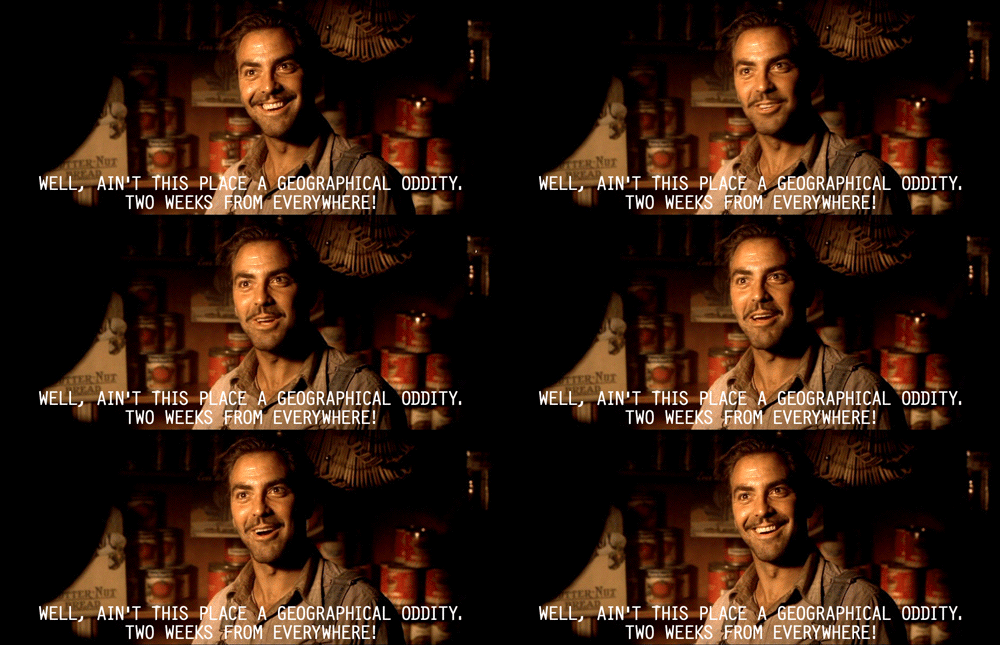
I don't know what can be done about that all that realistically. For one, the process of retail consolidation away from small country stores (left) toward larger stores (right) started long before you and I were born.
wHjplc8.gif
o-brother-where-art-thou-woolworth.gif

Woolworth started in 1879.
Now, if we had universal health care, that would be less of an issue but it still would be an issue as far as providing a wage that allows workers to pay rent and buy groceries and afford transportation.
The rent at least should be a lot lower in, say, Bumfuck, AL than in a major metro area.
And ACA, while not full universal health care, did a lot to bring health insurance to more people.
Try reading this article by the well known leftist magazine, Forbes:
Oh, good! This article talks about a lot of topics I have touched on. Note for starters that what the author is talking about is benefitting the upper middle class and "merely rich", and not really billionaires. Bezos et al do not care about mortgage interest deduction, but a surgeon making $500k does. If you want to make the tax system more progressive, you should not focus on far-fetched schemes to "eliminate billionaires" while ignoring the merely rich.
Forbes said:
The reason most people don’t get the mortgage interest benefit is because claiming it requires itemizing tax deductions rather than using the standard deduction. But to itemize, you need enough deductions. In 2019, the Tax Foundation estimated how many people itemized after those big tax changes in 2017 that made it harder for most taxpayers to do so. It was 13.7%, or more than 17 percentage points lower than before the 2017 law.
Same goes for SALT deductions that Democrats fought so hard to keep very high. Those don't benefit anybody who takes the standard deduction either, but they do benefit the 10%ers, especially in high-tax blue states.
Compare that to the child tax credit under the pandemic aid, a move that cut childhood poverty by about half, which Politifact verified. But that ended quickly, as it cost $125.5 billion a year, according to the Tax Policy Center. Which is significantly less than the price tag for subsidizing housing for a small percentage of relatively well-off taxpayers.
But the Pandemic-era expanded child tax credit is part of the same problem. You do not need to itemize, but it is available up to $400k of income. Why should a single person making $40k subsidize the children of somebody making 10x that?
Or talk about workarounds that avoid the estate tax. There are tactics wealthy people can employ (because if you’re not wealthy, you’re not going to qualify for the estate tax). One is called step-up basis. Say you have some assets. You bought them decades ago and they’ve appreciated significantly. You are ultimately taxes on the increase in their value for capital gains, and it takes a sale of the assets to trigger the tax. Instead, you hold the assets until your death, when they pass onto your heirs. But with a basis step-up, the value is reset to its current level and the heirs don’t suddenly have a big tax bill to meet. All that increased value is now invisible to the tax authorities.
The author is conflating estate taxes with capital gains taxes. Estate taxes are, yes, due only above a certain high cutoff ($15-30M) and applies to the value of the estate. Step-up basis applies to capital gains on increase of an asset value and is not affected by the estate tax cutoff. If your parent has a $300k rental property they bought decades ago for $100k, $200k is taxable income if they sell it, but it resets if it passes to you. Of course, those with more assets benefit more, but the author is wrong for conflating it with the estate tax.
Another National Bureau of Economic Research study, this one from 2021, pointed to a massive amount of tax dodging by the wealthiest in the country. “We estimate that 36% of federal income taxes unpaid are owed by the top 1% and that collecting all unpaid federal income tax from this group would increase federal revenues by about $175 billion annually,” the researchers wrote.
Top 1% is far more people than just the handful of billionaires you and some others here are so focused on.
That would pay for the child tax credit and still leave $50 billion additional to put toward the national debt. But who’s taxes get the most scrutiny? People who earn very little.
I disagree that we should expand the already very generous child tax credit. Especially in the Biden-era form of it being available up to $400k in income and not tapering off with increased number of children.

 
Forbes said:
The reason most people don’t get the mortgage interest benefit is because claiming it requires itemizing tax deductions rather than using the standard deduction. But to itemize, you need enough deductions. In 2019, the Tax Foundation estimated how many people itemized after those big tax changes in 2017 that made it harder for most taxpayers to do so. It was 13.7%, or more than 17 percentage points lower than before the 2017 law.
Same goes for SALT deductions that Democrats fought so hard to keep very high. Those don't benefit anybody who takes the standard deduction either, but they do benefit the 10%ers, especially in high-tax blue states.
Or the top 40%'ers who paid off their house, but the property taxes are high enough to be a mortgage on their own rights. Where my not 10% uncle and aunt live in New Jersey, the average property tax costs around $11k a year. I always want to kick people in the shins in Ohio when they whine about the property tax rates. The house I grew up in Massachusetts is worth nearly 10 times what it was in 1983. SALT is higher in the Northeast because costs are higher. Generally because there are jobs, infrastructure, and growth.
 
You appear to be putting your own interpretation to the words that I typed.to for your own special narrative.
I don't see what other interpretation is possible, and you aren't trying to explain one. Your option.

I’ve stated that I am neither an accountant nor a lawyer and I don’t have a specific number in mind. For a while, we had a 90% tax rate for the very highest tier.
Yes, it was 91% from 1945 until 1963. Three Americans became billionaires during that period, Howard Hughes and a couple of oil tycoons. It's a ton easier to become a billionaire now, with the economy so much bigger and the dollar so much smaller.
So the economy did not collapse when the tax rate was 91% and some people became billionaires anyway. So what’s the problem with a 91% tax now on billionaires and near billionaires?
Cherry picking.

There never was a real 91% bracket unless you were stupid.
 
If Amazon and Walmart did not drive other businesses out of business then there would be other jobs available. I get it: you live in a major metropolitan area and I don't know that you ever travel outside of that area to more rural areas or small towns.
I know there are many drawbacks of online and big box shopping, but the advantages of the economies of scale means that they can offer lower prices and thus attract price-conscious customers.
Smaller specialized stores can survive only when there is a sufficient customer base. Higher-end boutique style stores can only survive when there is a sufficient base of better-off, less price conscious customers.
Retail in general has been bifurcating in recent years, with high-end and low-end both benefiting while middle-price retailers have suffered - too expensive for the price-conscious customers, too down-market for the label-conscious ones.

I don't know what can be done about that all that realistically. For one, the process of retail consolidation away from small country stores (left) toward larger stores (right) started long before you and I were born.
wHjplc8.gif
o-brother-where-art-thou-woolworth.gif

Woolworth started in 1879.
Now, if we had universal health care, that would be less of an issue but it still would be an issue as far as providing a wage that allows workers to pay rent and buy groceries and afford transportation.
The rent at least should be a lot lower in, say, Bumfuck, AL than in a major metro area.
And ACA, while not full universal health care, did a lot to bring health insurance to more people.
Try reading this article by the well known leftist magazine, Forbes:
Oh, good! This article talks about a lot of topics I have touched on. Note for starters that what the author is talking about is benefitting the upper middle class and "merely rich", and not really billionaires. Bezos et al do not care about mortgage interest deduction, but a surgeon making $500k does. If you want to make the tax system more progressive, you should not focus on far-fetched schemes to "eliminate billionaires" while ignoring the merely rich.
Forbes said:
The reason most people don’t get the mortgage interest benefit is because claiming it requires itemizing tax deductions rather than using the standard deduction. But to itemize, you need enough deductions. In 2019, the Tax Foundation estimated how many people itemized after those big tax changes in 2017 that made it harder for most taxpayers to do so. It was 13.7%, or more than 17 percentage points lower than before the 2017 law.
Same goes for SALT deductions that Democrats fought so hard to keep very high. Those don't benefit anybody who takes the standard deduction either, but they do benefit the 10%ers, especially in high-tax blue states.
Compare that to the child tax credit under the pandemic aid, a move that cut childhood poverty by about half, which Politifact verified. But that ended quickly, as it cost $125.5 billion a year, according to the Tax Policy Center. Which is significantly less than the price tag for subsidizing housing for a small percentage of relatively well-off taxpayers.
But the Pandemic-era expanded child tax credit is part of the same problem. You do not need to itemize, but it is available up to $400k of income. Why should a single person making $40k subsidize the children of somebody making 10x that?
Or talk about workarounds that avoid the estate tax. There are tactics wealthy people can employ (because if you’re not wealthy, you’re not going to qualify for the estate tax). One is called step-up basis. Say you have some assets. You bought them decades ago and they’ve appreciated significantly. You are ultimately taxes on the increase in their value for capital gains, and it takes a sale of the assets to trigger the tax. Instead, you hold the assets until your death, when they pass onto your heirs. But with a basis step-up, the value is reset to its current level and the heirs don’t suddenly have a big tax bill to meet. All that increased value is now invisible to the tax authorities.
The author is conflating estate taxes with capital gains taxes. Estate taxes are, yes, due only above a certain high cutoff ($15-30M) and applies to the value of the estate. Step-up basis applies to capital gains on increase of an asset value and is not affected by the estate tax cutoff. If your parent has a $300k rental property they bought decades ago for $100k, $200k is taxable income if they sell it, but it resets if it passes to you. Of course, those with more assets benefit more, but the author is wrong for conflating it with the estate tax.
Another National Bureau of Economic Research study, this one from 2021, pointed to a massive amount of tax dodging by the wealthiest in the country. “We estimate that 36% of federal income taxes unpaid are owed by the top 1% and that collecting all unpaid federal income tax from this group would increase federal revenues by about $175 billion annually,” the researchers wrote.
Top 1% is far more people than just the handful of billionaires you and some others here are so focused on.
That would pay for the child tax credit and still leave $50 billion additional to put toward the national debt. But who’s taxes get the most scrutiny? People who earn very little.
I disagree that we should expand the already very generous child tax credit. Especially in the Biden-era form of it being available up to $400k in income and not tapering off with increased number of children.
Rents in my bumfuck town are not particularly low, except by comparison with say, NYC, Hawaii, LA or San Fran or Chicago or other very large metropolitan areas. But since it is a college town, that's not a surprise. In the town where I grew up and my siblings and some of my niblings still live, one nibling lives with her mother still because she cannot afford to pay rent in this very plain jane hole in the wall town much less a larger, nicer town. It's what's keeping her mother in her house, which she'd prefer to sell as well: she wouldn't be able to afford rent. Or to buy a smaller place than the already modest home she's in now. Another nibling lives at home with the parental unit. A third is sharing an apartment with a significant other.

I know what childcare costs these days (think college tuition) and frankly, a child credit is a great idea and very necessary. Because childcare is so expensive, it is difficult for parents to be able to save up to help their kids afford college. I know that it is harder to swallow for those making $400K+--I agree. Unfortunately/fortunately such credits do not take into account whether one lives in a high cost of living area or a more modest cost of living area.

A lot of younger people are waiting until they 'can afford' a kid to try to have kids. Which is smart until you consider that by the time a couple is earning enough money to comfortably be able to rely on only one income or one full time plus one part time income, the woman is likely seeing a diminishment in fertility, necessitating expensive interventions. Plus, if you are earning good money after struggling as a young adult, a lot of people have a difficult time dealing with a lower standard of living due to costs of childcare and childrearing not to mention the hit to the salaries of new parents (usually the mothers) if they reduce the hours they are working or simply choose to not lean into the heaviest of the demanding tracks at work in order to accommodate childrearing. If that is even a choice.

We raised our kids and were glad of a tax credit, however modest at that time. It didn't come close to covering the cost but it was a nice little bonus to offset a lot of costs and sleepless nights and paths taken and not taken in order to try to do a decent job rearing a kid or two.

The reason people who are childless should support other people having children is because, unless you die pretty young, you will at some point in your life need to rely on the services and labor of people who are the ages of any children you might have had but did not or even grandchildren.

Wealthy people do not need childcare tax credits or deductions for interest on mortgages or other deductions that people with more modest incomes do need--and may not qualify for as standard deductions are usually more beneficial than itemized until you hit a certain level of itemization.

Again, my idea is that we should not have billionaires because at that level of wealth, they are not truly subject to the same rules that you and I are and that is completely wrong and anti-democratic. I think that everyone should pay their fair share on a progressive rate of taxation that should not have an upper cap.
 
Forbes said:
The reason most people don’t get the mortgage interest benefit is because claiming it requires itemizing tax deductions rather than using the standard deduction. But to itemize, you need enough deductions. In 2019, the Tax Foundation estimated how many people itemized after those big tax changes in 2017 that made it harder for most taxpayers to do so. It was 13.7%, or more than 17 percentage points lower than before the 2017 law.
Same goes for SALT deductions that Democrats fought so hard to keep very high. Those don't benefit anybody who takes the standard deduction either, but they do benefit the 10%ers, especially in high-tax blue states.
Or the top 40%'ers who paid off their house, but the property taxes are high enough to be a mortgage on their own rights. Where my not 10% uncle and aunt live in New Jersey, the average property tax costs around $11k a year. I always want to kick people in the shins in Ohio when they whine about the property tax rates. The house I grew up in Massachusetts is worth nearly 10 times what it was in 1983. SALT is higher in the Northeast because costs are higher. Generally because there are jobs, infrastructure, and growth.
Between our property taxes and our homeowner's insurance, it's less than our mortgage but not that much. And we live in a small town in the mid-west. Property taxes and home owner's insurance are normally rolled into your mortgage payment so 'invisible' to you or at least under the radar until you pay your mortgage off.
 
You appear to be putting your own interpretation to the words that I typed.to for your own special narrative.
I don't see what other interpretation is possible, and you aren't trying to explain one. Your option.

I’ve stated that I am neither an accountant nor a lawyer and I don’t have a specific number in mind. For a while, we had a 90% tax rate for the very highest tier.
Yes, it was 91% from 1945 until 1963. Three Americans became billionaires during that period, Howard Hughes and a couple of oil tycoons. It's a ton easier to become a billionaire now, with the economy so much bigger and the dollar so much smaller.
So the economy did not collapse when the tax rate was 91% and some people became billionaires anyway. So what’s the problem with a 91% tax now on billionaires and near billionaires?
Cherry picking.

There never was a real 91% bracket unless you were stupid.
No shit, Sherlock. :rolleyes:
 
The definition came from the Legal Information Institute at Cornell Law School. I'll take their "brain damaged idiocy" over some stranger on the internet with absolutely no proof of actual training in the subject.
This is classic "argument from authority". Bomb offered an explanation as to why this definition, or at least your interpretation of it, makes no sense. Instead of offering your reasoning as to why you think it does, you retort with "but Cornell".
 
No, but there are really no effective democracies where half the country’s population of hundreds of millions of people hold less combined wealth than the wealthiest 57-350 individuals. (From perplexity - I asked it several ways and the sources varied but all were similar.)
Still [citation needed]. Actual source, not AI slop.
I don’t think you can let a handful of unelected people control/own most of every thing in a country of hundreds of millions, and really call it democracy.
Business owners is a different category from elected officials. Duh.
 
Yes that is true. One of the pitfalls of a high tax rate is that it is usually offset by various deductions and exclusions.

One of the reasons rates were lowered at the top levels were to try to simplify and avoid additional deductions and exclusions. Also to benefit those most ablr to successfully advocate fir changes most in their favor.
Yeah, the old system was simply too complex to balance. The true tax rate was more about how you played the game.

But there was also the problem that since the corporate tax rate was lower you had a huge problem with hiding personal stuff as corporate. Without computers, effectively hopeless to defeat. And note that this means we don't know what people's true income even was.
 
... If the higher the income, the more political power, really were incompatible with a democratic republic, then every single democratic republic that has ever existed was incompatible with a democratic republic.
I apologize, I forgot I was dealing with the terminally pedantic.

The higher the income, the more political power, especially at the billionaire level and above. Which, IMO is incompatible with the principles of a democratic republic.
Ah, so every single democratic republic that has ever existed was incompatible with the principles of a democratic republic. Got it. So why should we think your personal conception of the Platonic Form of the Democratic Republic is a better expert on what the principles of a democratic republic are than actual real-life democratic republics? Opposition parties have always depended for their survival on rich people deploying their wealth as a counterweight to the power of the Leviathan.
Instead of you killing brain cells to put words in the mouths of others, why not stop and mull over what others write?
I lost you…..
Yes you did.
#Bomb20 said:
For example, if every single democratic republic that has ever existed was incompatible with the principles of a democratic republic, so what?
So if every single democratic republic that has ever existed was incompatible with whichever principles you label "the principles of a democratic republic", why the bejesus should anyone accept your assertion that the principles you slapped that label onto were in point of fact the actual principles of a democratic republic? Why shouldn't they instead suspect that you might have put the label on the wrong principles? What evidence do you have that you correctly identified the principles of a democratic republic?
You didn’t answer my question. I see no reason(s) to answer yours.
 
Those who don't think the uber rich should pay their fair share of taxes, that they give enough already. Even though sometimes that enough is less than what a worker at a nursing home pays. Or effectively nothing.
We have already shown that you are mistaken in the notion that the "uber rich" pay "effectively nothing".
 
The definition came from the Legal Information Institute at Cornell Law School. I'll take their "brain damaged idiocy" over some stranger on the internet with absolutely no proof of actual training in the subject.
This is classic "argument from authority". Bomb offered an explanation as to why this definition, or at least your interpretation of it, makes no sense. Instead of offering your reasoning as to why you think it does, you retort with "but Cornell".
No,it's not. You are misinterpreting the argument from authority fallacy.
An argument from authority (or appeal to authority) is a claim where the opinion of an expert or authority figure is used as primary evidence. It becomes a logical fallacy when the cited source lacks expertise, is biased, or when the claim is contradicted by a broader consensus.
 
Those who don't think the uber rich should pay their fair share of taxes, that they give enough already. Even though sometimes that enough is less than what a worker at a nursing home pays. Or effectively nothing.
We have already shown that you are mistaken in the notion that the "uber rich" pay "effectively nothing".
“Effectively nothing “ is a vague term, so you couldn’t have shown anything unless and until there is an agreed upon definition.
 
Last edited:
Those who don't think the uber rich should pay their fair share of taxes, that they give enough already. Even though sometimes that enough is less than what a worker at a nursing home pays. Or effectively nothing.
We have already shown that you are mistaken in the notion that the "uber rich" pay "effectively nothing".
It’s already been discussed that some uber wealthy do not draw income but live off of loans borrowed against their assets, there for owing no income taxes. Musk in some years has drawn no income from his assets and therefore owed no personal income taxes. Warren Buffet famously remarked that his housekeeper paid more income taxes than he did.
 
The definition came from the Legal Information Institute at Cornell Law School. I'll take their "brain damaged idiocy" over some stranger on the internet with absolutely no proof of actual training in the subject.
This is classic "argument from authority". Bomb offered an explanation as to why this definition, or at least your interpretation of it, makes no sense. Instead of offering your reasoning as to why you think it does, you retort with "but Cornell".
No,it's not. You are misinterpreting the argument from authority fallacy.
An argument from authority (or appeal to authority) is a claim where the opinion of an expert or authority figure is used as primary evidence. It becomes a logical fallacy when the cited source lacks expertise, is biased, or when the claim is contradicted by a broader consensus.
The fallacious appeal to authority can oftentimes be seen in the wild as a parent says "because I'm your parent and I say so" with regards to some claim of fact like "why is bedtime 8:30?"

The authority itself is usually levelled in terms of "power over" or "at the head of an organization" rather than "has respectable knowledge of the subject matter".

In these cases, it falls under the broader umbrella of "non-sequitur" fallacies, as the fact or reason doesn't actually follow from the statement given, here the statement being "statement of authority".

The folks over at Cornell Law School at least have some argumentation which they present alongside their conclusions, and they will most surely give their reasons for holding a definition to some concept and then naming it such.

To argue against such a definition as an argument from authority, without some practical and real objection to it and given it's assured underpinning in theory by Cornell, is to argue in clear bad faith
 
Rents in my bumfuck town are not particularly low, except by comparison with say, NYC, Hawaii, LA or San Fran or Chicago or other very large metropolitan areas. But since it is a college town, that's not a surprise.
I would guess they are also lower than a MCOL city like Atlanta, despite being a college town.
But being a college town also makes it not a true Bumfuck area anyway. College kids bring in money, and thus businesses catering to them will spring up. Bars, restaurants, stores. Uber/taxis to drive those who don't have a car on campus or who went out drinking. And of course, the college itself will have employment opportunities for the locals.
A third is sharing an apartment with a significant other.
Snipped most of this for length, but yes, it can be expensive living by yourself, especially for young people starting out. But of course, sharing with a boy/girlfriend is easier than a random roommate or parents.
I know what childcare costs these days (think college tuition) and frankly, a child credit is a great idea and very necessary.
College students (prodigies like Young Sheldon notwithstanding) are usually not minors. Child tax credits do not apply to them anyway, but other programs like Pell Grants do.
Because childcare is so expensive, it is difficult for parents to be able to save up to help their kids afford college.
I understand that some child tax credits are a good idea, but there needs to be a balance. What we have now is a ratcheting where these child benefits get more and more generous at the expense of the rest of us.
I know that it is harder to swallow for those making $400K+--I agree. Unfortunately/fortunately such credits do not take into account whether one lives in a high cost of living area or a more modest cost of living area.
Maybe poverty levels should be different for different places, but it is not trivial to implement. But in any case, if you want to make the tax code more progressive, you can't subsidize upper middle class on the backs of the lower middle class.

Snipped a bunch because it is reiterating a lot of the points I do not contest. Yes, child rearing is expensive. But it is a choice, and thus the costs be primarily carried by the parents. And in the US we already have a lot of subsidies for parents from existing child tax credits to free K-12 education, often with free meals thrown in. I do not see why we should add to it like Biden and Kamala wanted to do, especially when it benefits the rich.

Again, my idea is that we should not have billionaires because at that level of wealth, they are not truly subject to the same rules that you and I are and that is completely wrong and anti-democratic. I think that everyone should pay their fair share on a progressive rate of taxation that should not have an upper cap.
I agree that we should make the tax code more progressives with added tax brackets for high incomes.
I disagree that the goal should be to do away with billionaires through onerous taxation, since it is in all of our best interests to encourage creation of successful companies. The internet boom created a lot of billionaires, yes, but it also created a lot of economic growth for all of us. That is also part of self-interest. I don't have to think that I will be rich as Bezos one day to think that taking away equity in successful businesses would harm economic growth.
 
No,it's not. You are misinterpreting the argument from authority fallacy.
An argument from authority (or appeal to authority) is a claim where the opinion of an expert or authority figure is used as primary evidence. It becomes a logical fallacy when the cited source lacks expertise, is biased, or when the claim is contradicted by a broader consensus.
Broader consensus is that (almost) no country in the World considers unrealized increases of asset valuation as equivalent to "income".
 
“Effectively nothing “ is a vague term, so you couldn’t have shown anything unless and until there is an agreed upon definition.
In which case you should have the same objection over Toni's initial use of the term. So why didn't you object to her directly?
 
Back
Top Bottom