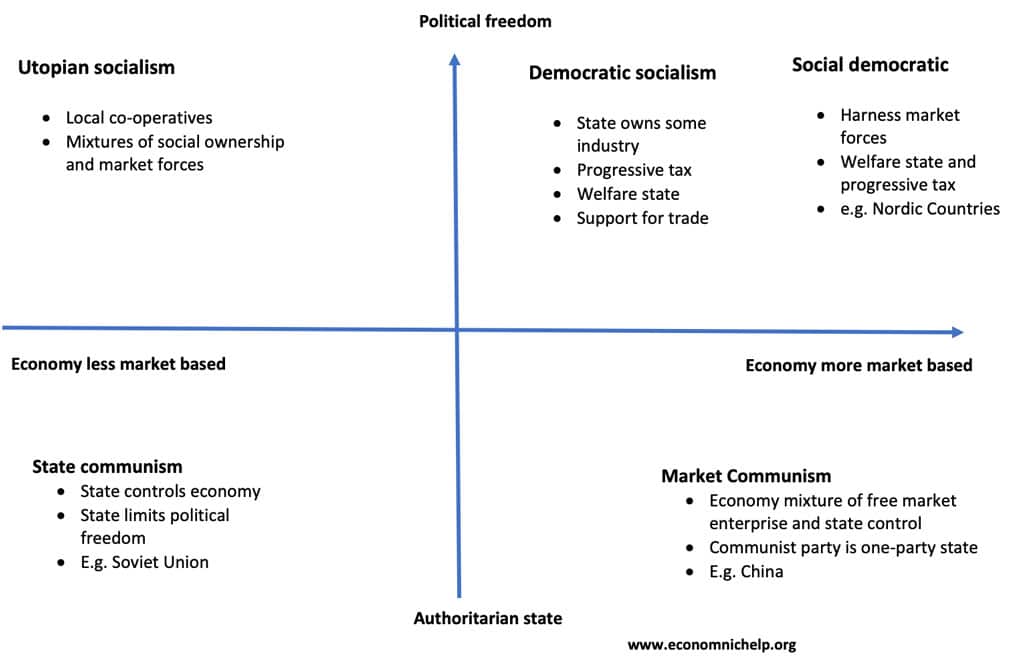
Hmm. Well. I don't know if you have noticed but Marx won all over the world. There's not a single country on Earth today that isn't in part socialist and follow some socialist principles. Marxism became so all pervasive that we've become blind to what ideas come from Marx.
That's the reality today. There's no serious debate anywhere about removing all socialist programmes. All discussions isn't "if", but "how much".
What are you smoking? Of course you're equivocating on the word "socialist"; I guess that's become pretty much de rigueur -- but equivocating on the word "Marx" is over the top. No, Marx has not won all over the world; he's won in Cuba and in North Korea and in the halls of university literary criticism departments. The principles you're labeling "socialist" that every country in the world follows are not ideas that come from Marx; they're ideas from the various competing currents within 19th-century leftist ideology
that Marx spent his career opposing. Marx's version of "socialism" was all about abolishing private ownership of the means of production and doing away with the profit motive. The so-called "socialism" that has become all-pervasive is all about financing social programs, a safety net, and income flattening by
harnessing the profit motive -- by leaving private ownership of the means of production intact and taking a cut of its profits. That's the opposite of Marx's ideas. Out of all the socialist ideas that have "won all over the world", which ones do you imagine
came from Marx?
Every country is today comfortable with taxing people and using the money for welfare. Progressive taxes are the norm. It's just standard. This is socialism. You can combine socialist policies within a capitalist framework. Marx thought it wasn't possible. But it is... obviously. We've done it. Almost everywhere.
Yes, exactly. That idea that won all over the world didn't come from Marx -- it's an idea Marx explicitly rejected.
I don't think he rejected it, or even thought it was undesireable. He didn't think it was possible. He thought that any capitalist who doesn't strive towards maximising profits will be outcompeted by those who do. He saw an ever escalating survival of the fittest scenario where the laws of nature will force capitalists to treat workers as badly as possible. He just didn't have the imagination to conceive of stuff like antitrust laws and a government strong enough to enforce it. Nobody did. Adam Smith also acknowledged this problem. He also didn't think it was solvable.
We also need to acknowledge that Marx's idea that history is marching towards the inevitable workers revolution, changed how constitutions were written and laws were formulated. Bismarck's laws were put in place to prevent that "inevitable" march towards revolution. Marx was super super famous in his own lifetime. He came to influence the world as he was writing about it. He could write that something was impossible and then the world changed to make it possible. Because he wrote it.
Or to put it another way, unless governments had responded to prevent this march of history, then perhaps he'd been proven correct?
So what idea that won all over the world came from Marx?
Workers (ie the poorest) having political influence. Once the electorate was expanded to all people Marxism had conquered.
When Marx wrote the Communist manifesto democracy meant rule by those with property. At best the richest 20 or 30% of men.
Nobody educated took the idea that most humans were capable of voting intelligently seriously. Experiments with expanding the electorate came after the 1948 revolutions, ie after the publican of the Communist Manifesto.
He doesn't actually define what a "dictatorship of the proletariat" means. But he couldn't use the word "democracy" back then. Because democracy then meant rule by a wealthy elite. I think, all he meant by that, was that the poorest have equal power to the richest. I'm aware there's other ways to interpret it.
I think you underestimate Marx's theories as well as the impact he's had on the world.
Not at all -- his influence was huge. I'm just not seeing anything positive about it. He sent the world on a wild goose chase that we'd all be better off never having gone down, same as Robespierre, and Muhammad.
The idea that technological innovations and wealth shape culture and our beliefs comes from Marx. This idea has shaped our modern world more than anyone else.
How do you figure? This idea has shaped scholarly papers in academia. How has it shaped the actual course of history?
Because it's how we write and interpret history. You and me, when we're talking about history now, we're using Marxist language. Nobody uses any other framework to understand history today. Nobody. You can just pick up any old history book and compare how they talk. Tacitus? It's wildly different. Machiavelli? Gibbon? Voltaire was coming close. But not quite. Condorcet was also coming close.
I'm not saying Marx invented this out of thin air. It was an evolution of ideas. Marx just perfected it. But this is, in essence, Marx's genious idea. Ie, that genius ideas by one person are actually collective ideas that evolve over time.
He took Adam Smith's theory on incentives and combined it with Hegel's dialectics.
I read Hegel in college -- that's a lot of wasted hours I'll never get back. What the heck is better about the theory of incentives with Hegel's logorrhea added in than the straight Adam Smith?
Adam Smith is just talking about wealth. How money influences our behaviour. What Marx added is that wealth is changing/corrupting and influences our values. If someone has power over us, and there's a chance we get to share in that power if that person likes us, we're more likely to like them, and it will shape our entire being around that. Absolute power corrupts absolutely, is a very Marxist idea.
Hegel's dialecticism is how cultural evolution works. Hegel's driver of history is great men. There comes powerful men who shape history around them (thesis) and then the world reacts to the great man, (antithesis) and then the combination (synthesis) creates a new culture. He developed his ideas while Napoleon was tearing through Europe. His final work where this has all chrystalised came out 2 years after Waterloo.
Marx replaced "great man" with "social and technological innovation and wealth". And that's now how we all talk about history today.
Adam Smith wasn't wrong. Hegel wasn't wrong. Marx just improved on their theories.
Structuralism is 100% Marx. The idea that it's not great men who shape world events but technology and incentives is Marx. We all just take that for granted today. It's called "a materialist reading of history". We all read history like that. Whenever we today talk about history and ask why something happened the way it did, we all think and answer as a Marxist would. Everyone. It's just default today. That's the degree of his impact on the world today.
Well, in the first place, again, this idea has shaped scholarly papers in academia. How has people's opinion on the importance of great men shaped the actual course of history? And in the second place, huh?!? Of course "great men" shape history! The world would be completely different today if Muhammad had never lived, or St. Paul. (Or, for that matter, Karl Marx, assuming your claim about his impact on the world is correct.) Probably likewise Augustus, Charles Martel, Napoleon, Lenin, and Hitler, though it could be argued someone else would have taken those guys' places.
Marx's contribution to thinking about world history is essentially, if it hadn't been Mohammed, it would have been someone else who did it instead. Technology and social innovations create an environment where all you need is someone to take the first step, and then it'll mostly be on rails. It's not that their contribution is worthless. But things around the great men of the world were more important than the great man himself. That's obviously true to a great degree. Don't you think?
And philosophy is the same. Philosophy builds upon older philosophy. Sooner or later a philosopher will think a new thought based upon the ideas of those before. What name we attach to the philosopher is less important than the idea.
When S:t Paul was racing around the Mediterranean it was full of cults and sects who were evolving towards monotheism. The cult of Isis is pretty much identical to Christianity. Minor details are different. We could have been talking about how Isianity developed. Then we wouldn't care about S:t Paul. We'd talk about some other prophet. But the result was similar. Marx's idea is that the historical development was inevitable. Modern historians do not agree with this anymore. We don't think historical developments and the progress of ideas go in a straight line and are inevitable. This is the difference between modernism and post modernism. Marx was a modernist thinker.
I want to make it clear. I don't think Marx was correct about everything. I just want to give him credit where credit is due.
You're just super wrong. ... He was wrong about loads of stuff. Obviously. He was so early. But we don't care about all the stuff philosophers are wrong about. We only care about what they were right about. For whatever reason we like to point out Marx's mistakes, as if that invalidates all the stuff he was right about. ... He's a very impressive thinker.
So what was he right about that's actually important?
All the stuff I mentioned above. The big one is that power structures in society influence our values. Before Marx nobody thought that.
His theories can explain how a small group of people can control a large group of people and the large group of people will like it and contribute to the control.
Yes, agreed. But moderates, if they win, create stable systems. That's why when moderate socialists managed to take power (which they did all over the west) they created healthy and stable systems. We're all living in them now.
We don't have libertarian free market capitalism anywhere in the world. Nowhere. It's not a thing. Neither is feudal monarchies. Marx won.
That's not
Marx winning. That's
Lasalle and Bismarck winning.
Sure. That's a perfectly fine way of putting it.
But I think if Lassalle wins that means Marx wins. I don't think Marx was the end of history, as if philosophy stopped developing after Marx. Lasalle took Marx's ideas and continued developing them. Whether you think the main contributor of the ideas was Lassalle or Marx, I don't think matters. Also... not caring about what great man came up with the idea... is the essence of Marxism.
Bismarck was a conservative who wanted authoritarian royal rule. His concessions to the socialists was exactly that, concessions. He wanted to give the workers as little as possible. But you're not wrong in that was instrumental and making it happen. And it did become the model for the rest of the world. A model we still use.