• Welcome to the Internet Infidels Discussion Board.

Some of the AI fears felt outlandish. Maybe not so much now.

Predictions are cheap.

Actual productivity gains are yet to be demonstrated.


My feeling is that AI is shit. It is never going to pay back its development costs, or even come close.

It's useful for a handful of fairly trivial things, few of which are more beneficial than they are harmful.

I see it as having much the same impact as crypto-currency. For most ordinary people, none at all. For speculators, some will get very rich, and some will lose their shirts.

In my own work AI has speeded up things immensaly. On many levels.

Quite s few have been made redundant.

Its benefits are obvious.

How productivity is demonstrated is down to which metrics are used. We can prove any position that way.

I think you are talking shit

Annecdotally, for an art project I am involved with, the music composer vibe coded a system that mixed the music dynamically and adjusted the music depending on where you were in the art piece and what you were doing in it. It was built and coded from scratch. It worked great. Not a ptogrammer. He's a musician. Not technical at all.

That's an example of what AI unlocks

 
In my own work AI has speeded up things immensaly. On many levels.

Quite s few have been made redundant.

Its benefits are obvious.
It's sertanley helpt yore speling.

When quality isn't important, I expect AI does speed things up a lot. When quality is important, I expect people will be cursing AI in a year or two, as the mistakes become apparent.
 
How productivity is demonstrated is down to which metrics are used. We can prove any position that way.
Great. So your claim of increased productivity is an unfalsifiable claim, and as such, valueless.
I think you are talking shit
I think you are talking shit.

So... ?
 
In my own work AI has speeded up things immensaly. On many levels.

Quite s few have been made redundant.

Its benefits are obvious.
It's sertanley helpt yore speling.

Ha ha. Iidb gets the quality of spelling they pay me for.

When quality isn't important, I expect AI does speed things up a lot. When quality is important, I expect people will be cursing AI in a year or two, as the mistakes become apparent.

That's exactly the point. With AI quality goes down and speed goes up.

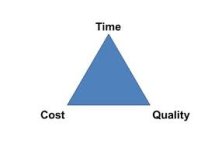
Its about economics. Higher quality costs money. If customers don't value it, its wasted effort. The goal of any market actor is to spend as little as possible while keeping customers satisfied.

A trend I have seen in IT is that cost of d
programming has gone down (because less developers) and cost of testing has gone up (because more testers). But overall costs are down.

I see a future where the field of test automation will explode. So programming is more automated and a testing is more automated. Basically layering different AIs on top of eachother. If that works we can keep layering automated testing indefinitely, which might make overal quality improve AND cheaper.

Fundamentally its just about money.

We've all seen enshitification of comodities. Why does it keep happening? Because consumers don't value quality. We just want it to be good enough. Why would software development be any different?
 

Attachments

  • images - 2026-10-09T083729.722.jpeg
    images - 2026-10-09T083729.722.jpeg
    2.7 KB · Views: 0
How productivity is demonstrated is down to which metrics are used. We can prove any position that way.
Great. So your claim of increased productivity is an unfalsifiable claim, and as such, valueless.

No, its not. That's not how it works. When there's a paradigm shift there's also a paradigm shift in how we measure success


Annecdotally
This "evidence" just gets more and more pathetic.

If you think that's pathetic then you're a fool imho. I think its super impressive that non-technical people can code now. Aka "vibe coding". If you don't understand the significance of this; enjoy your obsolessence
I think that you are more than a little optimistic to gush over vibe coding, which is a technique for building simple web sites and other software applications quickly via natural language interactions. There are problems with that technique, because there may be built-in security and other flaws that only a human coder would be aware of. LLM applications do have many advantages, but their biggest drawback is that people confuse their behavior with actual intelligence. If people come to rely on them too heavily for complex and dangerous tasks, they can yield disastrous results. I think we see some of that already, with corporations rushing to cut jobs that they think "AI" can do better, only to find out that their imagined savings remain imaginary. Hence, we are seeing increasing numbers of stories like this:

Companies Fired Workers For AI. Now They Want Them Back​

Employers who laid off workers citing AI are already starting to regret it​

Why companies are hiring workers back after AI-driven layoffs​

 
Last edited:
Annecdotally
This "evidence" just gets more and more pathetic.

If you think that's pathetic then you're a fool imho.
Anecdotal evidence is considered pathetic by a lot of people who you should hesitate to call fools, but then, Dunning and Kruger can readily explain why you might not understand that.
I think its super impressive that non-technical people can code now. Aka "vibe coding". If you don't understand the significance of this; enjoy your obsolessence
I think it's a disaster waiting to happen, and analagous to "I think its super impressive that non-pilots people can fly commercial airliners now". With enough automation, I am sure they could, but why the living fuck would we want them to, and in what weird-ass universe would it be a good idea?

As far as obsolessence, it seems unlikely that my current job can be made obsolete by a bunch of desk jockeys in cheap suits, in the few years that remain before I retire. I stopped working with a computer as a major tool of the trade just before Covid; It turns out that staring at a computer for thirty to fifty hours a week isn't the only kind of work that exists.
 
In my own work AI has speeded up things immensaly. On many levels.

Quite s few have been made redundant.

Its benefits are obvious.
It's sertanley helpt yore speling.

Ha ha. Iidb gets the quality of spelling they [sic} pay [sic] me for.

Did Ai write that for you? Did you ask it how to spell “strawberry?”


When quality isn't important, I expect AI does speed things up a lot. When quality is important, I expect people will be cursing AI in a year or two, as the mistakes become apparent.

That's exactly the point. With AI quality goes down and speed goes up.

Oh, lovely. Let’s drive everything down to the lowest common denominator. Just as long as crap is delivered FAST in the short-attention span theater that the world is swifty becoming. What a wonderful future!
Its [sic] about economics. Higher quality costs money. If customers don't value it, its [sic] wasted effort.

More AI?


The goal of any market actor is to spend as little as possible while keeping customers satisfied.

A trend I have seen in IT is that cost of d …

Huh? More AI?
programming has gone down (because less [sic] developers) …

More AI?
 
Annecdotally
This "evidence" just gets more and more pathetic.

If you think that's pathetic then you're a fool imho.
Anecdotal evidence is considered pathetic by a lot of people who you should hesitate to call fools, but then, Dunning and Kruger can readily explain why you might not understand that.

It wasn't evidence. It was a practical example I mentioned. The argument preceded the example.

Enjoy your own Dunning-Kruger moment

I think its super impressive that non-technical people can code now. Aka "vibe coding". If you don't understand the significance of this; enjoy your obsolessence
I think it's a disaster waiting to happen, and analagous to "I think its super impressive that non-pilots people can fly commercial airliners now". With enough automation, I am sure they could, but why the living fuck would we want them to, and in what weird-ass universe would it be a good idea?

I think its a good idea.

Your argument is basically, an untrained yokel off the street could operate a Spinning Jenny. But why would we want them to when expert hand loom weavers can do it much better.

Your argument is bizarre imho


...
I think its super impressive that non-technical people can code now. Aka "vibe coding". If you don't understand the significance of this; enjoy your obsolessence
I think it's a disaster waiting to happen, and analagous to "I think its super impressive that non-pilots people can fly commercial airliners now". With enough automation, I am sure they could, but why the living fuck would we want them to, and in what weird-ass universe would it be a good idea?
I think its a good idea.

Your argument is basically, an untrained yokel off the street could operate a Spinning Jenny. But why would we want them to when expert hand loom weavers can do it much better.

Your argument is bizarre imho
Hyperbole aside, you miss the point that writing vibe coding is not going to replace human coders for complex programming tasks. It is bad enough that these LLM-powered programs are black boxes in terms of how they translate human language into code, but the resulting programs need to be tested and debugged, just as they do with real human coders. Someone designing a simple web site may be able to get away with vibe coding, but not all web sites are simple, and an unintelligent coding machine could introduce all sorts of bugs and security flaws that would require real intelligence to fix. AI slop is not something that is going to disappear with attempts at scaling these programs to ever higher level of accuracy.

There are some things that LLMs can do really well. They can make real coders more efficient and perhaps cut down on the number of people needed to produce sophisticated applications, just as they can produce quick high-quality translations from foreign languages that they have been trained to translate for. What they cannot do as well is handle more complex tasks like declassifying documents securely or translating sophisticated literary works. The reason for that is that LLMs lack the experiential underpinnings necessary to understand language. They do not interact with the world in the same way that intelligent beings do--with sensory information, emotions, situational knowledge, and so on.

To the extent that LLM agents appear to have that knowledge, it is only because they are drawing on statistical patterns of words in texts written by actual intelligent humans. So they can analyze patterns of words and create statistically related patterns of words (or code or imagery). Unfortunately, it is only mimicked intelligence that sometimes produces weirdly goofy results from a human perspective (sometimes called "hallucinations" and "AI slop"). Unfortunately, since people are strongly inclined to anthropomorphize these programs, they tend to treat them as if they were really intelligent. After all, they are designed to mimic real intelligence. The danger comes in when users of these "intelligent" programs come to trust and depend on their results, because they don't understand what's going on inside the black box. That's what happens when the robotaxi driving you to a destination suddenly veers off into oncoming traffic because of some statistical anomaly in how its internal model interacts with reality.

Family Baffled By Waymo Robotaxis Constantly Hanging Out in Front of Their House​

Empty Waymo vehicles swarm Atlanta cul-de-sac​

 
the resulting programs need to be tested and debugged,
Yes. The problem I see is with the laziness of the users of AI.
My limited experience is mostly with the slop on youtube.
A vid of something technical, historical or archeological will have inaccurate photos of objects that change size or shape every few seconds. Like the too many fingers problem. A vid about food pronounced rib-eye stake, RY-BY, 5 times. Another pronounced GPS as GPs, like a plural of GP.
A human would not make those mistakes. More to my point... A human would not let those mistakes pass.
The people who choose to use AI are just fucking lazy.
If you don't have a photo of something, don't fake it, that cheats your viewer. If you use an AI to write or narrate, PROOFREAD and listen to it before releasing it.
 
That's exactly the point. With AI quality goes down and speed goes up.

Its about economics. Higher quality costs money. If customers don't value it, its wasted effort. The goal of any market actor is to spend as little as possible while keeping customers satisfied.

A trend I have seen in IT is that cost of d
programming has gone down (because less developers) and cost of testing has gone up (because more testers). But overall costs are down.

I see a future where the field of test automation will explode. So programming is more automated and a testing is more automated. Basically layering different AIs on top of eachother. If that works we can keep layering automated testing indefinitely, which might make overal quality improve AND cheaper.

Fundamentally its just about money.

We've all seen enshitification of comodities. Why does it keep happening? Because consumers don't value quality. We just want it to be good enough. Why would software development be any different?
Aha, now I understand. The problem is you are in the realm of art. Art doesn't have definitive quality.

Note that we can't layer automated testing as the AI doesn't actually know the objective and thus can't understand right outside of narrow contexts like math where a language exists for establishing truth.
 
How productivity is demonstrated is down to which metrics are used. We can prove any position that way.
Great. So your claim of increased productivity is an unfalsifiable claim, and as such, valueless.

No, its not. That's not how it works. When there's a paradigm shift there's also a paradigm shift in how we measure success


That is a hallmark of bubbles. Eventually the bubble pops and we find out it was an illusion.

No. Not at all how bubbles work.

1) there's a new cool thing
2) people believe the new cool thing is the future
3) people over invest in the new cool thing
4) the bubble pops
5) the market adjusts to what the new cool thing was actually worth

The point is that we don't get bubbles around stuff that doesn't add actual value. The problem with bubbles is just that there's a disagreement about exactly how much value is added
 
The point is that we don't get bubbles around stuff that doesn't add actual value.
Like tulips...

The very first, and arguably most famous speculative bubble of all.

What "actual value" did tulips add (other than in the trivial sense that pretty much any tangible object has a non-zero value)?

The very definition of a bubble is that prices massively exceed the valuation defined by long term fundamentals - so called "intrinsic value". That a non-zero intrinsic value exists is not relevant.

The amount of money invested to date on AI is staggering. It is yet to show the slightest glimmer of an application that has an intrinsic value sufficient to return a profit from that investment.

All the evidence, including your own examples of use cases for AI, says that the eventual returns will be a minuscule fraction of the costs already incurred.
 
Last edited:
the resulting programs need to be tested and debugged,
Yes. The problem I see is with the laziness of the users of AI.
My limited experience is mostly with the slop on youtube.
A vid of something technical, historical or archeological will have inaccurate photos of objects that change size or shape every few seconds. Like the too many fingers problem. A vid about food pronounced rib-eye stake, RY-BY, 5 times. Another pronounced GPS as GPs, like a plural of GP.
A human would not make those mistakes. More to my point... A human would not let those mistakes pass.
The people who choose to use AI are just fucking lazy.
If you don't have a photo of something, don't fake it, that cheats your viewer. If you use an AI to write or narrate, PROOFREAD and listen to it before releasing it.
Depends on the situation. So long as the AI artifacts do not mess with the understanding it can be useful anyway--if the purpose is the scene as a whole an imperfect model of an object in it is annoying but I won't automatically reject it for that.
When I programmed, I often relied on open source libraries of code to model components of the program I was working on. It is stupid to try to invent everything out of whole cloth. I see nothing wrong with using AI as a more convenient source of such information on how to accomplish certain tasks. So-called AI definitely has a use in that sense. It is not really going to replace programmers, but there are always going to be those who see it more as a way to reduce the cost of labor than to make it more productive by freeing employees up to accomplish other tasks that they have the skills for and the AI programs do not. Firing intelligent people and replacing them with artificial stupidity is natural human stupidity.
 
Back
Top Bottom