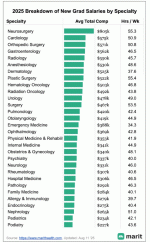
One of the primary justifications for the prices a physician charges is absolutely rooted in the need to discharge enormous student debt.
You're correct - that is one of the most common excuses given.
I don't think it's a good excuse. I think it's convenient, and when people see "$200K of student debt" their eyes go wide, and they tend to stop there and think "Oh, that's a lot, of course they need to be able to pay that".
Which is fine, if you don't look further than that. If you actually look, you end up finding that student loan debt is in about the same range as any other doctorate for any other subject. But people in other fields don't make as much in income as doctors do. So we have special pleading for doctors due to their debt load, which doesn't apply to any other field with a similar debt load.
Additionally, if you look at the actual quality of life and discretionary spending of doctors, there's a disconnect. They have nicer homes, nicer cars, nicer everything than the average person AFTER paying toward their student loans. They're objectively and observably NOT just scraping by under an enormous debt load. They're clearly doing just fine even with student loans. There's nothing stopping them from choosing a smaller house, a more modest car, and foregoing the country club membership for a few years so they can prioritize those loans -
just like normal people are expected to do when they take on a large loan that they're expected to pay back.
It's a common excuse, but it doesn't stand up to scrutiny.
And since doctor's charges are fairly large portion of the cost of healthcare and health insurance in the US, I don't think they should get a free pass from scrutiny just because they have debts.
Another piece that goes into the cost of a simple office visit os that out of the fee that is paid, only a percentage goes into the physician’s bank account, after it has been duly taxed, of course.
And AFTER all of those expenses, they STILL bring home a salary that puts them in the top 5% of household incomes in the US.
Straight out paying for public education through university and grad and professional schools is a step towards lowering the cost of a doctor’s visit.
If you don't address the fallacious arguments around debt burden, you end up expecting that the public subsidizes the doctor's lifestyle, while not being able to have a similar quality of life themselves. You're creating an elite class that are more worthy than everyone else. If that's what you want to do, fine, say that.
Truthfully, I think that everyone should be able to earn enough at a full time job to pay for good housing, good food, good medical care, transportation, clothing, utilities: basic necessities of life.
Question: Do you think that doctors are living lives that meet only the basic necessities of life?



 I'm pretty protective of the public's money across the board. I don't think that's a bad thing.
 AI Generated Content
 Periods of time on my hands, but not retired by any means. I can usually get a few hours a week. Once in a while I have a slow week or I'm screwing around while on vacation and spend more time. Some weeks it's less.