• Welcome to the Internet Infidels Discussion Board.

Quirky Little Museums, Offbeat Destinations, and Sights Less Seen

Ever wondered what it would be like to wander around a desert oasis among rare plants and animals that are found nowhere else in the world? Ash Meadows National Wildlife Refuge is just the place for it.

The Refuge is about 90 miles west of Las Vegas on the way to Death Valley. It was almost lost to developers before being bought up by conservationists in the 1980s and then donated to the government to be managed by the U.S. Fish and Wildlife Service.

The star attractions are the pupfish, very small but active little fish that live in the isolated springs. The Amargosa pupfish can be seen from the boardwalk behind the Ash Meadows visitor center in the pools and steam among the mesquite. The critically endangered Devil's Hole pupfish are in a tiny pool of water deeper in the Refuge. They are harder to see because their little pool is at the bottom of a high sided natural well and visitors aren't allowed to get too close, but with binoculars you can see them feeding on the single shelf of rock that gets enough sunlight for algae to grow.

You can also see tumbleweeds growing all over the place. CGP Grey made a very entertaining video about that pestiferous plant and the U.S. Dept. of Agriculture's so-far futile war against it:

 
Last edited:
While we were in Tasmania last year, we visited the Pooseum in Richmond.

It is exactly what its name suggests. And surprisingly fascinating.
If the US is closer to you than Tasmania, there is a Poozeum in Williams, AZ as well. It has a paleontological focus, home to a large collection of dinosaur coprolites including "Barney", the largest pile of dinosaur shit ever discovered. Admission is free, as they make more than enough money from their gift shop to keep the doors open. Yes, you can buy your very own dino scat there.
 
When I was in San Francisco I intended to go to the Print Museum but the airline lost my luggage and I spent the 2 days trying to get it back and then to replace my clothing. ( Not their fault, entirely. HA had bushfire related concerns at the time.)

If anyone ever gets there, please clue me in.
If you mean the ABM museum. t's a lot of fun! Like a lot of San Francisco museums, it is pretty small but possesses ssome rare treasures. Some of my favorite SF museums are the Beat Museum in North Beach (see the car they used in the film version of on the road, wall after wall of handwritten notes and poetry, and wander across the street to the City Lights Bookshop where it all went down or across another street to see some of the city's oldest peep shows and brothels), the GLBT museum in the Castro (See one of the first, if not the first, Pride flags, from before they censored the pink stripe), the Cable Car museum (self-explanatory but a lot of fun) the Institute of Illegal Images on 20th (the world's largest collection of acid blotter art, which has become self-fulfilling prophecy at least twice when prosecutors have tried but failed to generate enough evidence to forcibly close it) and the Vibrator Museum on Polk Street (You may think you know what's in this one, but I bet you don't realize for how long people have been manufacturing or otherwise ad hoc assembling "marital aids")
 
I thought about this thread because I recently visited the American Fur Store and Dr Beaumont Museum, on Mackinac Island in Michigan, US, which is largely dedicated to the curious and disturbing story of how medical science learned about the functions of gastric acids. It involves an accidental (or "accidental") shooting of a mixed-race trader at the shop, the ambitions of an amateur medical doctor (uh huh) with visions of academic grandeur, and years of careful but painful experimentation on a not-fully-willing human subject with an open musket wound that never healed. I was lucky enough to go on a day when the presiding ranger happened to be a volunteer who'd recently completed a PhD in historical medicine, so we talked for like an hour, haha. But if you are less dedicated than I, it's a two-room museum with interesting information that won't take very long to see, and admission is free with your ticket to see Fort Mackinaw on the hill up above, which is also worth seeing and which most visitors to the island will want to visit anyway.

 
I thought about this thread because I recently visited the American Fur Store and Dr Beaumont Museum, on Mackinac Island in Michigan, US, which is largely dedicated to the curious and disturbing story of how medical science learned about the functions of gastric acids. It involves an accidental (or "accidental") shooting of a mixed-race trader at the shop, the ambitions of an amateur medical doctor (uh huh) with visions of academic grandeur, and years of careful but painful experimentation on a not-fully-willing human subject with an open musket wound that never healed. I was lucky enough to go on a day when the presiding ranger happened to be a volunteer who'd recently completed a PhD in historical medicine, so we talked for like an hour, haha. But if you are less dedicated than I, it's a two-room museum with interesting information that won't take very long to see, and admission is free with your ticket to see Fort Mackinaw on the hill up above, which is also worth seeing and which most visitors to the island will want to visit anyway.
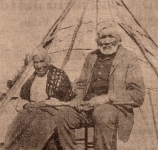
If you get across the bridge to Saint Ignace you can visit the Museum of Ojibwa Culture. They have a room there dedicated to my wife's great, great, great grandfather, Chief Santiago (at least they used to). (Not sure I have enough greats in there.) They display his crafts, documents, and photographs.

1785177793117.png

Passed away in 1911 at the estimated age of 108.
 
I thought about this thread because I recently visited the American Fur Store and Dr Beaumont Museum, on Mackinac Island in Michigan, US, which is largely dedicated to the curious and disturbing story of how medical science learned about the functions of gastric acids. It involves an accidental (or "accidental") shooting of a mixed-race trader at the shop, the ambitions of an amateur medical doctor (uh huh) with visions of academic grandeur, and years of careful but painful experimentation on a not-fully-willing human subject with an open musket wound that never healed. I was lucky enough to go on a day when the presiding ranger happened to be a volunteer who'd recently completed a PhD in historical medicine, so we talked for like an hour, haha. But if you are less dedicated than I, it's a two-room museum with interesting information that won't take very long to see, and admission is free with your ticket to see Fort Mackinaw on the hill up above, which is also worth seeing and which most visitors to the island will want to visit anyway.
If you get across the bridge to Saint Ignace you can visit the Museum of Ojibwa Culture. They have a room there dedicated to my wife's great, great, great grandfather, Chief Santiago (at least they used to). (Not sure I have enough greats in there.) They display his crafts, documents, and photographs.

View attachment 54824

Passed away in 1911 at the estimated age of 108.
I wanted to visit, but could not talk my traveling companions into the time expenditure, as they had endured several museums already by that point. My partner and I have a tendency to wear out people's patience reading every sign, chatting with the staff, photographing things... ah, well.

What an interesting family legacy, though! The last regnant chief of a noble line.The government scattered the Ojibwe far and wide, but you can't erase memories entirely. Chief Santiago's work is known to many an American student, though few will realize it; he was Henry Wadsworth Longfollow's principal interlocutor, when he was writing his noted poem "The Song of Hiawatha".
 
What an interesting family legacy, though! The last regnant chief of a noble line.The government scattered the Ojibwe far and wide, but you can't erase memories entirely. Chief Santiago's work is known to many an American student, though few will realize it; he was Henry Wadsworth Longfollow's principal interlocutor, when he was writing his noted poem "The Song of Hiawatha".
Yup, that's mentioned in his obit that was printed in the Detroit Free Press at the time. Also his real last name was Misetiago. I think Santiago was a furphy that became established. The tribe itself was sent further north to the Sault Ste Marie area and renamed to Chippewa.
 
In my neck of the words, there was a small museum (since closed) got to visit called the Brush museum. I always wondered if that was the name of the proprietor, or it contained a collection of brushes or a collection of brush.

In my town, there is The Polish Museum. I went expecting to see a collection of polishes but it is a museum of Polish heritage.
 
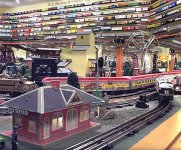
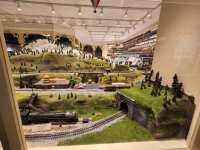
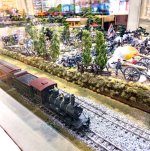
Lancaster County in Pennsylvania is mostly known for the Amish community, quilts, and farms. But it's also home to The National Toy Train Museum. If you like model trains, you'll love this place.

ogauge_resized.jpg

ad3a9e39-d720-4d83-b0dc-93e0da70c525b529ded71515a0e2cb_20230703_114643.jpg

It has a very extensive collection of train sets and some unique dioramas including one that accurately depicts a Civil War battle complete with flashing rifle muzzles and sounds of gunfire.

National-Toy-Train-Museum-9077.jpg
Just be sure to give yourself enough time to really explore the place. I was a bit rushed and could only spend about an hour there which wasn't nearly enough to satisfy the little kid in me who fondly remembers my Dad setting up his train set at Christmas.
 
Last edited:
Back
Top Bottom