• Welcome to the Internet Infidels Discussion Board.

Honest talk about the cost of being ugly

Just to clarify. We currently have no private prisons in the US, at least not at the federal level and based on other things I've read, th ere were never more than a small percentage of privately owned prisons. Most of the prisons in the US are inhumane and nobody should be placed in one for any reason. I said before. We need drastic prison reform. And, why can't most non violent offenders be offered house arrest with community service etc. Yes. We do need to keep violent offenders away from the rest of us, but even they should receive humane care and in some cases, rehabilitation and a chance to return to society.

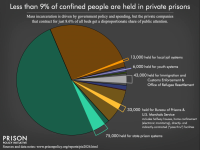
As of 2023, 28 states used privately run prisons — along with or instead of local jails and state-run facilities — to hold 7.1% of prisoners. Prison facility data is specific to sentenced prisoners and does not include federal detention centers where immigrants are held.

In January 2021, former President Joe Biden signed an executive order ending the use of privately operated prisons citing the importance of prisoner rehabilitation and redemption and the need to alleviate federal reliance on profit-based correctional systems, and noting that private prisons underperform in inmate resources and inmate and staff safety. The Bureau of Prisons (BOP) ended the use of private prisons on November 30, 2022.

Although President Trump has since overturned Biden’s executive order, there are zero inmates in private federal institutions as of March 5, 2026.

We absolutely DO have private fur profit prisons in the US: not including ICE


I’m sorry: my phone is not allowing me to paste in info from the link.

In 2022, nearly 90 thousand people in the US were incarcerated in private fir profit prisons in the US. Including in Georgia.


It changed after Biden's executive order. There may be some state prisons which are privately owned, but the link I read said there are no longer any federal ones, despite Trump over turning Biden's executive order to ban them. Regardless, if you read about the state and federal prisons, they are horrendous, understaffed and often run by gangs. I've read enough articles about them to realize that most of our prisons, regardless if they are state, federal or privately owned, are horrible. Your articles is from 2022, which is before Biden's order to ban all privately run federal prisons.
 
What concerns me about legalization is that for a lot of people they think that if it is legal, it's not really bad.
Ok, so legalize everything. That way they won’t take it as assent/endorsement.
Do you suspect that legalizing drugs would make people think it’s okay to drink bleach, and shove UV lights up their ass? Will people suddenly think they’ll be fine if they down a whole bottle of codeine pills?

Will we need to abolish Darwin awards? Ooooh nooooes!
 
At the risk of derailing this derail,
The guy in the OP looks hot to me. Burley Daddy type, hubba hubba!

Looks are in the eye of the beholder.
Tom
 
RFKjr said the social benefits of alcohol outweigh the negatives, and ended government recommendations an alcohol consumption limits.

That's a different argument. Its an argument where we weigh the social benefits of a drug against its negative effect on health.

That's hard to quantify, so you could spin this whichever way you'd like.


Where addicts are given maintenance doses crime has gone down in the area, at east in some cases.

In which cases hasn't it?

Jut what we need, a nation addicted to more drugs.

Now that we have long term data on pot consumption it is far from harmless.

I've had pot smoker friends all my life. From my experience, I think its the most destructive drug of them all. Because its kills ambition. The side effects are maneagible enough for addicts to function in society. So they feel no pressure to get off it. So it just continues. They're content in their little bubble of nothing happening, perpetually. Its like a time machine that only goes forward in time.
Every friend of mine who used THC worked for a living, never committed a crime and most only used in the evening or on the weekend. My next door neighbors both use THC. She is a cosmetologist who cuts hair but she has a second job teaching cosmetology. Her husband is a veteran with PTSD but he also has a job delivering things locally for a small company. I've worked with many professional nurses who worked full time but also. used THC recreationally. One of my former doctors not only used but she sold t-shirts in her office promoting the legalization. Imo, she probably smoked too much because she was pretty ditzy or maybe just incompetent. I rarely use anymore. it's never been hard to stop. Sure, everything in moderation is best. Oh, I forgot. A close friend who is much younger than I am also uses. She said she gets crabby is she doesn't have any, but she never uses during the daytime or before work. Her biggest problem is that despite trying for years to stop smoking tobacco, she doesn't seem to be able to do that. My late father stopped smoking 2 packs a day immediately after the first info came out about the dangers of smoking. He also stopped using ETOH after becoming a religious nut. He weaned himself off of several Rx. drugs, including Valium. So, people are different in how they react to different drugs, as well as food.

When I mentioned food addiction earlier in this thread, I was referring to people like a former friend of mine. He lost a lot of weight by only eating once a day and exercising for hours after work. He told me that if he had a pint of ice cream in his freezer, he couldn't eat one serving, he had to eat the entire thing, regardless of the size of the container. He was an example of what I think of as a food addict. I have a friend who currently takes the GLP drugs and has lost 50 lbs so far. She told me that she gets very cranky if she can't overeat, but the drug has helped her limit her food intake.

I am able to manage my diet and almost never over eat. I count calories and do my best to keep them under 2000 per day. I exercise to help me control my weight. I am a small, older woman. I love food, but I am not a food addict, but I have compassion for those who are, including several friends of mine. I have compassion for addicts but someone who uses any drug in moderation and never drives while UTI, is not an addict. Still, ETOH and tobacco are currently the most abused drugs in the US. At least that's what the course I took last year claimed.
I eat food almost every day. Plus weed, plus alcohol. I’m fit for my age, am close to my “ideal weight”, and have few indices of mental degradation. I have also consumed almost every psychoactive drug I ever had a chance to sample, some in quantities that could “intoxicate” a whole small town.
After more than 60 years of such experience I agree with the assessment that tobacco and alcohol cause the most harm, but I believe that’s just circumstantial. Take away tobacco and alcohol and the next most readily available intoxicants will take their place.
People love to get a buzz. They always will.

someone who uses any drug in moderation and never drives while UTI, is not an addict

… and I never drive with a urinary tract infection!! 😁
 
Just to clarify. We currently have no private prisons in the US, at least not at the federal level and based on other things I've read, th ere were never more than a small percentage of privately owned prisons. Most of the prisons in the US are inhumane and nobody should be placed in one for any reason. I said before. We need drastic prison reform. And, why can't most non violent offenders be offered house arrest with community service etc. Yes. We do need to keep violent offenders away from the rest of us, but even they should receive humane care and in some cases, rehabilitation and a chance to return to society.

As of 2023, 28 states used privately run prisons — along with or instead of local jails and state-run facilities — to hold 7.1% of prisoners. Prison facility data is specific to sentenced prisoners and does not include federal detention centers where immigrants are held.

In January 2021, former President Joe Biden signed an executive order ending the use of privately operated prisons citing the importance of prisoner rehabilitation and redemption and the need to alleviate federal reliance on profit-based correctional systems, and noting that private prisons underperform in inmate resources and inmate and staff safety. The Bureau of Prisons (BOP) ended the use of private prisons on November 30, 2022.

Although President Trump has since overturned Biden’s executive order, there are zero inmates in private federal institutions as of March 5, 2026.
We absolutely DO have private fur profit prisons in the US: not including ICE


I’m sorry: my phone is not allowing me to paste in info from the link.

In 2022, nearly 90 thousand people in the US were incarcerated in private fir profit prisons in the US. Including in Georgia.


It changed after Biden's executive order. There may be some state prisons which are privately owned, but the link I read said there are no longer any federal ones, despite Trump over turning Biden's executive order to ban them. Regardless, if you read about the state and federal prisons, they are horrendous, understaffed and often run by gangs. I've read enough articles about them to realize that most of our prisons, regardless if they are state, federal or privately owned, are horrible. Your articles is from 2022, which is before Biden's order to ban all privately run federal prisons.
9% is not zero. Most people are not incarcerated in federal prisons. Biden did not eliminate all for profit prisons the first article is dated 2024 and uses 2022 data.


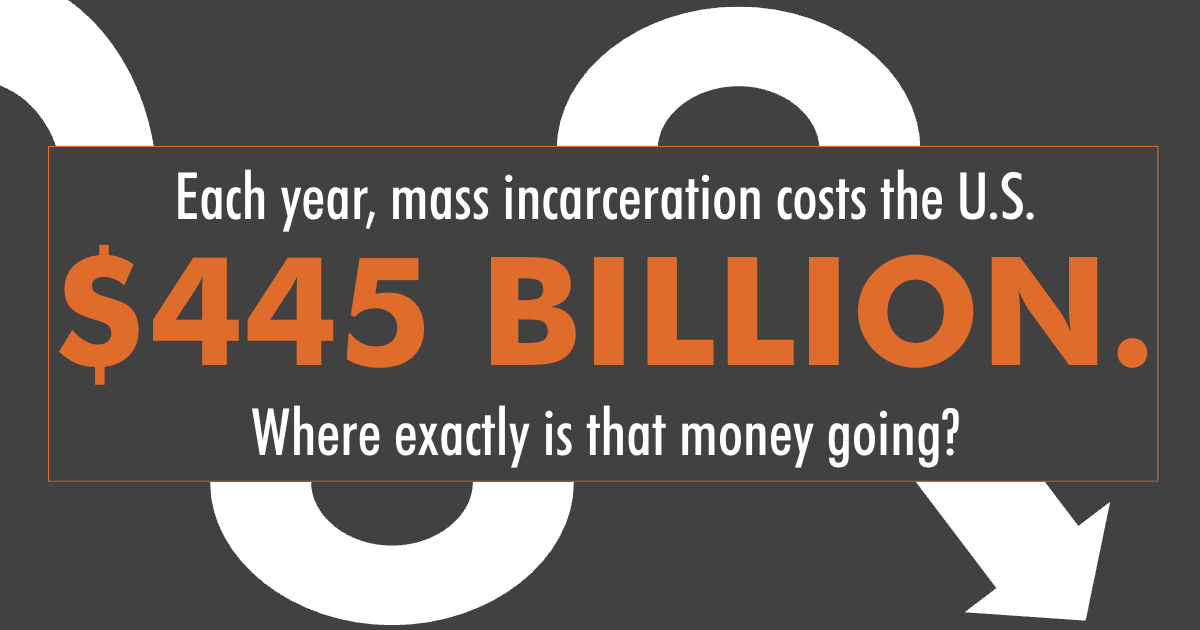
We are spending more than $9 billion annually on private prisons. A drop in the bucket, sure but no they gave not disappeared. And yes I think k they are too profitable to disappear without significant change.
 
Last edited:
Private contracts for running federal prisons ended in 2022. But we still have private federal incarceration in other contexts; some immigration detention facilities for instance, are run by private companies.
 
[SOME OF] The underlying and resulting issues will not go away.
FIFY
Many of the undesirable outcomes would go away.
The idea that legalising all drugs means not doing anything at all about their harmful impacts is absurd propaganda
That.
In fact it would make addressing those impacts much much easier.
Do you know any one who has grown up with alcoholic parents?

Do you think k that decriminalizing recreational drugs will make drug users less likely to be dysfunctional? To be more emotionally healthy? Less abusive?

Yes, it will probably reduce a great deal of crime. It will not make drug rehab programs increase or lessen the damage of the addict’s dysfunction in their family, friends, coworkers, communities.

I read my local news police blotter pages. Almost every single arrest is directly because of alcohol intoxication. Duis, assaults, some thefts. Don’t get me wrong: there are plenty of drugs around too. But most of what is on the police blotter is alcohol related.

Decriminalizing drug use will not touch any of that. It won’t make addicts more amenable to rehab. It won’t address underlying problems with chronic pain or emotional or mental health problems.
See anyone on here suggesting it will touch any of that?

Legalization will do nothing about the harm the drugs cause. What legalization will do is greatly reduce the secondary harm that comes from their illegality. And note that that is much of the harm.
 
Legalization will do nothing about the harm the drugs cause. What legalization will do is greatly reduce the secondary harm that comes from their illegality. And note that that is much of the harm.
Excellent post btw.

Even if it (legalizing substances) increases primary harm, which I am sure it would in the short term, the rebound when parents can effectively warn their kids off ingesting anything they don’t know, will have benefits to individuals (keeping them off drugs) and to social consciousness and economic well-being due to lack of threat from junkies jonesing for a hit and breaking into their house at 3am. Most real dedicated junkies will shortly self-un-alive by some mechanism or other. Probably at a rate comparable to that of rock stars in the sixties lol.

Reducing the profitability of drug related industries like incarceration would be nice too.
Do you honestly think parents warning kids to watch their drinks will change anything???

Don’t I wish.

The uptick in harms will not be short term. It hasn’t been further alcohol.

Alcohol is a very good proxy for recreational drugs in terms of societal harms.

We do not have feet or a smaller percentage of people who are problem drinkers. We have more.

Where the use of alcohol use perhaps pot differs from most recreational drugs is that it is quite possible to have a drink or two or maybe more and not have it cause significant problematic changes to your behavior. Not true of many recreational drugs
 
As a recovering alcoholic/addict, I’d like to throw in some random observations based on my own experience.

  • As a teenager I was introduced to alcohol through networks of friends with phony IDs, liberal parents who made alcohol available as a means of controlling its use, etc. I soon found I couldn’t easily get enough to satisfy me, so I turned to illegal drugs – pot, opioids, speed, cocaine, psychedelics, you name it. All were a lot easier for me to obtain than alcohol.
  • After I reached drinking age I resumed heavy drinking, in addition to the other drugs I had become familiar with.
  • I don’t understand Dr. Z’s objections are to the phrase “hit bottom.” To me it represents a psychological state which is defined differently for different individuals. In AA one hears of, and meets many, “high bottom” drunks who didn’t have to lose everything to realize they had a problem.
  • I am convinced that alcoholism has both a physiological and psychological component. There may eventually be developed genetic treatments for the physiological component.
  • As for pot turning people into slackers, I would observe that it may be correlation rather than causation. That is, people with little initiative or motivation may be drawn to pot smoking.
  • All that said, I am %100 on the harm reduction wagon. I believe a lot can be achieved with early and comprehensive education about what abuse looks like with drugs and the psychological aspects of addiction. Personally, I was in my late twenties and placed into an alcoholism awareness series of lectures as part of the penalties for getting a DWI before it ever occurred to me that I might have a drinking problem. By that time I was too far into the addiction for the realization to have an immediate effect, but it put the seed in my mind. I sobered up at the age of 38.
Sounds a lot like one of my in-laws. Except he didn’t really sober up ( more than 50 years later) and ended up in jail and even prison fstealing. It’s been decades since then and that did not slow him down. AFAIK, current drug use is limited to abusing pain meds, furnish do not blame him.

There is a genetic component to addiction as well. Another family member became addicted to pain meds plus alcohol for a chronic pain condition.

For myself, I actually find being even tipsy to be unpleasant. It feels the same to me as taking allergy meds: my head gets fuzzy and not in a good way. I know that I am extremely fortunate because of alcohol made me feel better, I’d be a huge lush.
 
Do you honestly think parents warning kids to watch their drinks will change anything???
Yes.
Once I passed crawling stage I never once ate detergents, insecticides or pretty much anything else known to be poisonous. Did you?
If questionable, I generally trusted my elders. None of my peers died either afaik. I didn’t even eat the colorful little “mother’s helpers” (Dexedrine) tablets my mom used to take or mysterious things in medicine cabinets. I did sample most things found outdoors, but nothing habit-forming. Raw marine mollusks were common fare. Coquiña shells … now I read that eating them right out of the sand will kill you. I probably would have been more averse to drugs if my peers were dying like flies from them. But no … some died but not ftom ingesting things, that I know of. You?
 
The theory goes that being addicted is a mental problem, rather than a naughty lifestyle choice. The theory builds on an assumption that there's a psychological issue at the core of the addiction and if they didn't have this issue, they wouldn't be addicted. The addictive substance or behaviour is employed to crowd out the distressing thoughts triggered by the psychological problem. And if they work on that issue, they will then be able to kick the addiction. And if we force addicts to have to chase drugs we make it harder for them to work on the underlying issue, thus perpetuating the addictive cycle. The goal with harm reduction is to give the addicts less problems, rather than more problems.
Couple of quibbles here:

1) It's not a mental problem, it's a coping mechanism for a problem.

How isn"t that a mental problem?

2) The problem might not be a psychological one in the first place. Drugs are often an escape from a hellish situation.

How isn't that a psychological problem?


Why are you assuming the root problem is mental?

Look at what happened with Vietnam. Lots of soldiers smoked opium while they were over there, most quit upon returning to the states. It was coping with the horrors of jungle war.
Why do you think that the horrors of war are not, at root, mental?

What do you think horror even is, if not a mental state?

That it can be an ephemeral response to something in the environment, and so can disappear when the environment changes, doesn't make it "not a mental state".
 
Do you honestly think parents warning kids to watch their drinks will change anything???
Yes.
Once I passed crawling stage I never once ate detergents, insecticides or pretty much anything else known to be poisonous. Did you?
If questionable, I generally trusted my elders. None of my peers died either afaik. I didn’t even eat the colorful little “mother’s helpers” (Dexedrine) tablets my mom used to take or mysterious things in medicine cabinets. I did sample most things found outdoors, but nothing habit-forming. Raw marine mollusks were common fare. Coquiña shells … now I read that eating them right out of the sand will kill you. I probably would have been more averse to drugs if my peers were dying like flies from them. But no … some died but not ftom ingesting things, that I know of. You?
There isn’t a single person I knew who developed a problem with substances that did not know that they were dangerous. Most had good parents who did their best to discourage risky behavior. That it was forbidden was part of the attraction.

Of course there are people with significant substance abuse in their families and that is either a deterrent or seems to feel inevitable as the way to cope. Genetics are a huge factor. Personally I detested my parents cigarette habit so much I never was even slightly tempted.

I didn’t get into dangerous household substances because I did not care to be beaten. There were no attractive colorful pods. Dangerous stuff was up high My sister stuck a Bobby pin in an electrical outlet. I will never forget the smell of burnt skin. When I was a young adolescent, occasionally my siblings and cousins and
I pushed boundaries by going into places we were forbidden to go: hay lifts and silos. A swampy woods. Grapevines over steep ravines. Past our boundaries on bike rides. We were older and it was easier to escape detection. We did not share our adventures with our parents.

I really don’t know why but it never occurred to me to try to sneak anything from the medicine cabinet. My parents ts were deathly afraid I’d try drugs which is which is weird because I was considered so straight that I would never take a toke if offered. So no one offered. To tell the truth the thought of anything messing with my brain was a huge deterrent. I have no idea why but I seem to be hard wired that way. It wasn’t fear of punishment: it was fear of not being able to think straight.

OTOH, I tasted a lot of different plant materials, my dogs kibble, had a thing for unsweetened chocolate and my son once at a grasshopper because he was angry I made him come with us someplace. He was 4.
 
The theory goes that being addicted is a mental problem, rather than a naughty lifestyle choice. The theory builds on an assumption that there's a psychological issue at the core of the addiction and if they didn't have this issue, they wouldn't be addicted. The addictive substance or behaviour is employed to crowd out the distressing thoughts triggered by the psychological problem. And if they work on that issue, they will then be able to kick the addiction. And if we force addicts to have to chase drugs we make it harder for them to work on the underlying issue, thus perpetuating the addictive cycle. The goal with harm reduction is to give the addicts less problems, rather than more problems.
Couple of quibbles here:

1) It's not a mental problem, it's a coping mechanism for a problem.

How isn"t that a mental problem?

2) The problem might not be a psychological one in the first place. Drugs are often an escape from a hellish situation.

How isn't that a psychological problem?


Why are you assuming the root problem is mental?

Look at what happened with Vietnam. Lots of soldiers smoked opium while they were over there, most quit upon returning to the states. It was coping with the horrors of jungle war.
Why do you think that the horrors of war are not, at root, mental?

What do you think horror even is, if not a mental state?

That it can be an ephemeral response to something in the environment, and so can disappear when the environment changes, doesn't make it "not a mental state".
War is mostly driven by economics.

The horrors cause a great deal of mental anguish and physical and economic anguish which is why we call them horrors.
 
To tell the truth the thought of anything messing with my brain was a huge deterrent.
Wow.
I was of the opposite persuasion. I read about LSD in a LIFE Magazine educational publication when I was in 8th grade. My mom was big on education, and we got the whole hardcover series. Found the bits on LSD fascinating and was eager to experience it. The idea that what I was experiencing was not firmly tethered to external circumstance, but was subject to biochemical conditions, which might be controlled by willpower … incredible!
That was in 1963-4 and LSD probably wasn’t illegal then. The term “substance abuse” wasn’t even in use at the time afaik.
I think I read the same Life Magazine (oops—just did the math and I don’t think it was the same issue of TIME because the math won’t math correct if yours was 1963-64.) and used it in a school science fair project. My elementary school didn’t actually teach science although we had a class called science and a book and a grade but definitely no actual science. But our teacher decided we needed to do projects for our school’s science fair and we partnered up. My partner, Diane and I decided to do a project about LSD —not the we knew much about it. But I read every article I could find and was horrified at the idea of anything messing with my brain. Diane thought it sounded way cool and would have liked to try it. We actually went to the state science fair which is where I learned that what we were taught at my elementary school had nothing to do with science but other kids at other schools dud actually learn science and their projects were so much more interesting and so much better to an ours. Diane didn’t care but I did.

Was excited to actually learn science in 7th grade. And even more excited in 8th grade when our teacher devised an entire curriculum based around our interests. I was hooked.
 
My sister, the one who is still alive, tried all kinds of drugs when she was a teenager, but luckily she never became addicted or got into trouble. She drank way too much during her 20s, partied late every night but easily gave up drinking around age 30. I never even tried weed until I was 30 and I never drank much at all. My narcotic pain relievers still work after 8 years and I never have had any side effects, nor do I crave them. They simply lower my pain level. I've stayed on the same dose for about 6 years.

Rx. drugs can be more deadly than many recreational drugs. I took tramadol for pain for a couple of years. It gave me weird brain sensations. It barely helped my pain and while it's a control drug, according to the neurologist I saw after it gave me seizures, it's not exactly an opioid. If I had listened to myself instead of the idiot doctors that misdiagnosed a partial seizure as a TIA, I probably never would have had the total seizures. I felt strongly that the tramadol was messing me up. I was told by the neurologist that about 2 percent of people that take that drug get seizures. Seizures can be deadly so I was lucky and my MRI was normal. I haven't had another one in over 15 years.

NSAIDS also give me severe side effects so there isn't a single one I can take at my age. One of my former patients almost died from a severe GI bleed second to a Rx. NSAID. The truth is that narcotic pain relievers are much safer for most older adults compared to the alternatives. I've had lots of patients who took them and other than one who was prescribed way too much fentanyl and hydrocodone, none of them ever had any negative issues. The one who was given such high doses of opioids did survive after a bout of pneumonia, as too high a dosage of narcotics can depress respirations. Her fucking pain doctor was giving her more than the normal dosage of fentanyl. He had the staff changing her transdermal patch every two days instead of every 3 days.

One of my husband's blood pressure meds gave him fainting spells. I'm the one who figured that out. I told him to try taking the drug at night so his BP would be lowest while sleeping. He never had another fainting spell since then. That was about 20 years ago.

A lot of Rx. drugs are also risk factors for dementia. Many of them are anti seizure drugs. Meds for diabetes can sometimes cause hypoglycemia, causing fainting or in severe cases, even death.

So, if recreational drugs were decriminalized and regulated, they would be much safer. Needle exchange programs would always be available. While there is no perfect answer to addiction or drug usage, when recreational drugs are legal, it does solve part of the problems. Read about the results in Portugal. While not perfect, it's helped the drug situation to a good extent.

Drugs have been around since the beginning of civilization if what I've read is valid and people will always look for an escape from reality. Not all people but a good percentage of people. Most people don't get addicted, but we should offer help for those who want it as well as making usage safer. They give methadone to heroin addicts who want to get off of the heroin, but methadone is also a synthetic opioid that is sometimes used to control pain. It just relieves the withdrawal and cravings for heroin addicts.

Oh wait. Now we're discussing war? My late father had severe combat related PTSD, so I'm well aware of how combat can fuck someone up. He took anti anxiety drugs almost his entire life to help cope. My ex was drafted but never was sent to Nam, but I remember watching his graduation from basic training and the guys in the last row were passing around a joint. Maybe that's why my sweet neighbor smokes so much weed, along with drinking ETOH, although he doesn't do it during the day. So far, he's very healthy but he's only around 50.

War! What is it good for? Absolutely nothing. Say it again. ( Sorry the line of that song popped into my head )

I wrote this last night, but never posted it as I was partly distracted by the noisy fireworks outside.
 
Back
Top Bottom