• Welcome to the Internet Infidels Discussion Board.

"Naturalism"; Any takers?

So I was bopping around the forum here and I noticed that many of our site sponsors espouse or promote a philosophy called "naturalism". I don't think I have ever paid attention to this particular emanation of Western secularism, and would be curious to know more about it. Does anyone here describe themselves as a naturalist? If so, what does the term mean to you? How is naturalism different from, say, materialism? What is the "nature" part of naturalism meant to refer to exactly? I can look up wikipedia on my own, but I am curious about your personal take.

The way I understand it, naturalism is the view that the world can be understood through natural processes rather than relying on supernatural explanations. But I think there’s an important distinction depending on how someone defines it.

For example, methodological naturalism is basically the approach used in science. It looks for natural explanations without necessarily taking a position on whether anything supernatural exists. Philosophical or metaphysical naturalism goes further, holding that reality itself doesn’t include anything supernatural.

As for the difference between naturalism and materialism, I think the two overlap quite a bit, but they’re not necessarily identical. Materialism, or what philosophers today generally call physicalism, holds that everything is ultimately physical or dependent on the physical. Naturalism is a broader term, and not everyone who identifies as a naturalist agrees on exactly what belongs in the natural world.

And I don’t think the word “nature” necessarily refers to plants, animals, or the environment. It’s really referring to the natural order of things, although even philosophers disagree about precisely where to draw that boundary.

What I find interesting is that naturalism doesn’t require someone to believe we already have explanations for everything. There are still plenty of unanswered questions. The real difference seems to be how someone approaches those questions and what kinds of explanations they’re willing to consider.

That’s my understanding of it anyway. I’d be interested to hear how someone who actually identifies as a naturalist would explain it.

NHC

You’ve been away for a while. :unsure: Welcome back! :)
 
There is something unnatural about this thread.

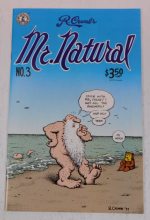
Anybody remember Mr Natural?

1794125105104.png
 
So I was bopping around the forum here and I noticed that many of our site sponsors espouse or promote a philosophy called "naturalism". I don't think I have ever paid attention to this particular emanation of Western secularism, and would be curious to know more about it. Does anyone here describe themselves as a naturalist? If so, what does the term mean to you? How is naturalism different from, say, materialism? What is the "nature" part of naturalism meant to refer to exactly? I can look up wikipedia on my own, but I am curious about your personal take.

The way I understand it, naturalism is the view that the world can be understood through natural processes rather than relying on supernatural explanations. But I think there’s an important distinction depending on how someone defines it.

For example, methodological naturalism is basically the approach used in science. It looks for natural explanations without necessarily taking a position on whether anything supernatural exists. Philosophical or metaphysical naturalism goes further, holding that reality itself doesn’t include anything supernatural.

As for the difference between naturalism and materialism, I think the two overlap quite a bit, but they’re not necessarily identical. Materialism, or what philosophers today generally call physicalism, holds that everything is ultimately physical or dependent on the physical. Naturalism is a broader term, and not everyone who identifies as a naturalist agrees on exactly what belongs in the natural world.

And I don’t think the word “nature” necessarily refers to plants, animals, or the environment. It’s really referring to the natural order of things, although even philosophers disagree about precisely where to draw that boundary.

What I find interesting is that naturalism doesn’t require someone to believe we already have explanations for everything. There are still plenty of unanswered questions. The real difference seems to be how someone approaches those questions and what kinds of explanations they’re willing to consider.

That’s my understanding of it anyway. I’d be interested to hear how someone who actually identifies as a naturalist would explain it.

NHC

You’ve been away for a while. :unsure: Welcome back! :)
I know, right? I’ve been away for a while. Just had a lot going on, catching up on things, buying stuff, tying up loose ends, and getting some projects done around the house. You know how it goes. Anyway, did I miss anything exciting while I was gone? Any DLH sightings?

NHC
 
I know, right? I’ve been away for a while. Just had a lot going on, catching up on things, buying stuff, tying up loose ends, and getting some projects done around the house. You know how it goes. Anyway, did I miss anything exciting while I was gone? Any DLH sightings?

NHC

No DLH sightings, whew! Things have been pretty bland around here and I haven’t been on much either. Place needs more intellectual heft IMO. Check out the thread where I proposed starting a monthly IIDB magazine. So far no takers. Hope that will change. You’d be a perfect contributor, along with a fair number of others.
 
To me, naturalism comes down to the idea, an assumption just as assumed as the axioms of math, that the universe itself has a mathematical structure.

This would imply that a lot of weird things that we observe come up for reasons that may seem trite like "spooky action at a distance" comes from the fact that in math there are different kinds of closeness.

Frankly, the longer I keep trying to solve a particular conjecture, the more I come to realize that our universe is in fact a "substitution system" of some kind, or closely related to such systems.

From that perspective, the "natural" "laws" we observe would simply be the axioms of logic that are required for "consistency" to hold, and it's less that "nothing can break them" and more that the very definition of existence excludes anything that would, in the same way that logic forbids things like triangles in a flat euclidean space having more than "180 degrees" between their angles.
 
The only thong I would say to all that is math aka models are not reality itself, they are a way of describing and explaining reality as we see it.

So, naturalism as a philosophy is a way of looking at things, not provable.

Good science has been produced by theists who would have rejected naturalism. like Newton.
 
math aka models are not reality itself
This is a very bold assertion, as bold as the assertion that the axioms of math fail.

It is as faith-based as anything else.

You are making the very unsupported statement that math is only a "model", whereas I say it is all that exists.

You are essentially arguing here for the existence of a thoughtful active God, from my perspective, in arguing reality is more than "math". Hell, not even an argument for a "thoughtful active (g)od" with a little g would give you "reality is more than math".
 
The cosmologist Max Tegmark argues that physical reality is not just described by maths, but IS mathematics. On his hypothesis every possible mathematical structure is isomorphic with a separate reality, so that we live in a mathematical multiverse. This is one of four different multiverses he believes are real.
 
Science is not faith based as would be said of a religious supernatural belief.

The theist argument that science is as faith based as religion has been well debated in the past.

Modern science is model based. I do not think laws or theories are the best terms. They are loaded terms open to subjective interpretation.

The Newtonian models of reality were once thought to be immutable truths, until relativity came along.

Relativity is a more comprehensive model, but there is no way to know if it is THE model upon which there can be no better.

The value or efficacy of a model is in how closely it predicts a result given an input. Netowtonian mechanics are still the mainstay in engineering mechanics. Newtonian gravity.

Science based on math is an approximation. Consider C = 2 * Pi * r, circumference of a circle. Commonly used in mechanics.

As there is no exact PI C is always an approximation. In reality there is no such thing as a prefect circle. The equation is an abstract model that provides useful results applied to physical reality.

Math is a human abstraction. All math is finite. All numbers as used to quantify reality are finite.

I believe the vernal statements of naturalism say science is the best way to describe and explore reality, not that the universe IS science.


The universe does not obey human laws of science. This has bee debated as well.

I observe motions of astronomical objects. They do not move because of how I decribe them.

The faith in a scientific model comes from repeated testing to the point it is accepted as valid.

A Newtonian model is F=MA. It is repeatedly validated ad expressed as being valid within an operational boundary..

To me it all comes down to ‘what is ultimate reality’, and how would we know it if we saw it.

And that leads into what is knowledge and how do we get it?

So, naturalism is a philosophy, a way of looking at things. Not an immutable truth.

There was past debate on whether numbers have some kind of independent reality, whether they are a phys cal reality. To me hat is a kind of mysticism. That would be counter to naturalism. Numbers are human abstractions.

The universe ran just fine before we invented math.
 
Last edited:
Science based on math is an approximation. Consider C = 2 * Pi * r, circumference of a circle. Commonly used in mechanics.

As there is no exact PI C is always an approximation.
That's demonstrably absurd, because

r = C/2π

So, by your exact logic, because there is no exact π, r is also always an approximation.
 
Back
Top Bottom