• Welcome to the Internet Infidels Discussion Board.

Tennessee Fucks Up

In an atheistic worldview there is no justice at all,
There is no justice, @Tigers!
Just this.
Seriously tho -
Atheism is irrelevant.
I have an atheistic worldview. I do not relegate the dispensing of justice to imaginary beings to satisfy my need to believe in justice. But I still experience justice and injustice. So I believe in justice as an experience, but not as a one that can be extracted as an outcome of enforcing laws.
 
But the death penalty can be justice too.
How? A dead person is not aware that he is dead.
So? He knows what’s,happening to him as he goes through it. He took a life. His is forfeit. He is getting what he deserves.
He is getting exactly what all of us get, no matter what we may or may not deserve.

And if it is quick, clean, and fairly painless, he is doing much better than most of us will.

Where's the justice in that?

Death being equated with justice is a purely religious concept - In the absence of an afterlife, there's no justice in death at all, other than as an end to the suffering of a blameless person.
If done right, he’s getting it decades earlier than he otherwise would. Yes, we will all die, and it may not be pleasant. But for the most part, the inmate would much rather live decades more, even knowing what inevitably awaits.
Ah, same argument as when Thoros stops the Hound from hacking to death the bandits who'd killed his friend...

Thoros: We're not butchers. We hang them.
The Hound: Hanging? All over in an instant. Where's the punishment in that?
Thoros: They die.
The Hound: We all bloody die.

- Game of Thrones
​
 
But the death penalty can be justice too.
How? A dead person is not aware that he is dead.
So? He knows what’s,happening to him as he goes through it. He took a life. His is forfeit. He is getting what he deserves.
He is getting exactly what all of us get, no matter what we may or may not deserve.

And if it is quick, clean, and fairly painless, he is doing much better than most of us will.

Where's the justice in that?

Death being equated with justice is a purely religious concept - In the absence of an afterlife, there's no justice in death at all, other than as an end to the suffering of a blameless person.
Death is not being equated with justice. Sometimes death is a possible consequence of justice.
We are not talking about a blameless person. We are talking about a known killer.

Cannot have religious concepts now can we? Outrageous!
"Religious" means it's a concept people believe in because it's a contagious brain parasite, not because they have a reason to think it's correct. Certainly you can have those, but why would you want to?

But that said, bilby's claim doesn't make a lot of sense. People think execution is a punishment spontaneously, for the intuitive reasons SLD posted. They don't think it because of a chain of people telling one another it is.

In an atheistic worldview there is no justice at all, ever. Good/evil - no difference between them. Boils down to might = right.
:consternation2: In a Christian worldview there is no justice at all, ever. Good/evil - only difference between them is how mighty the Guy is who opines whether something is good or evil. Boils down to might = right.

Do you accept that argument? Do you think I'm a competent expert on Christian worldviews? No? Well then why the heck do you think you're a competent expert on atheistic worldviews?

Justice doesn't depend on belief in gods. We can tell, because justice is vastly older than belief in gods. Primates have been practicing retribution against wrongdoers for about fifty million years.
 
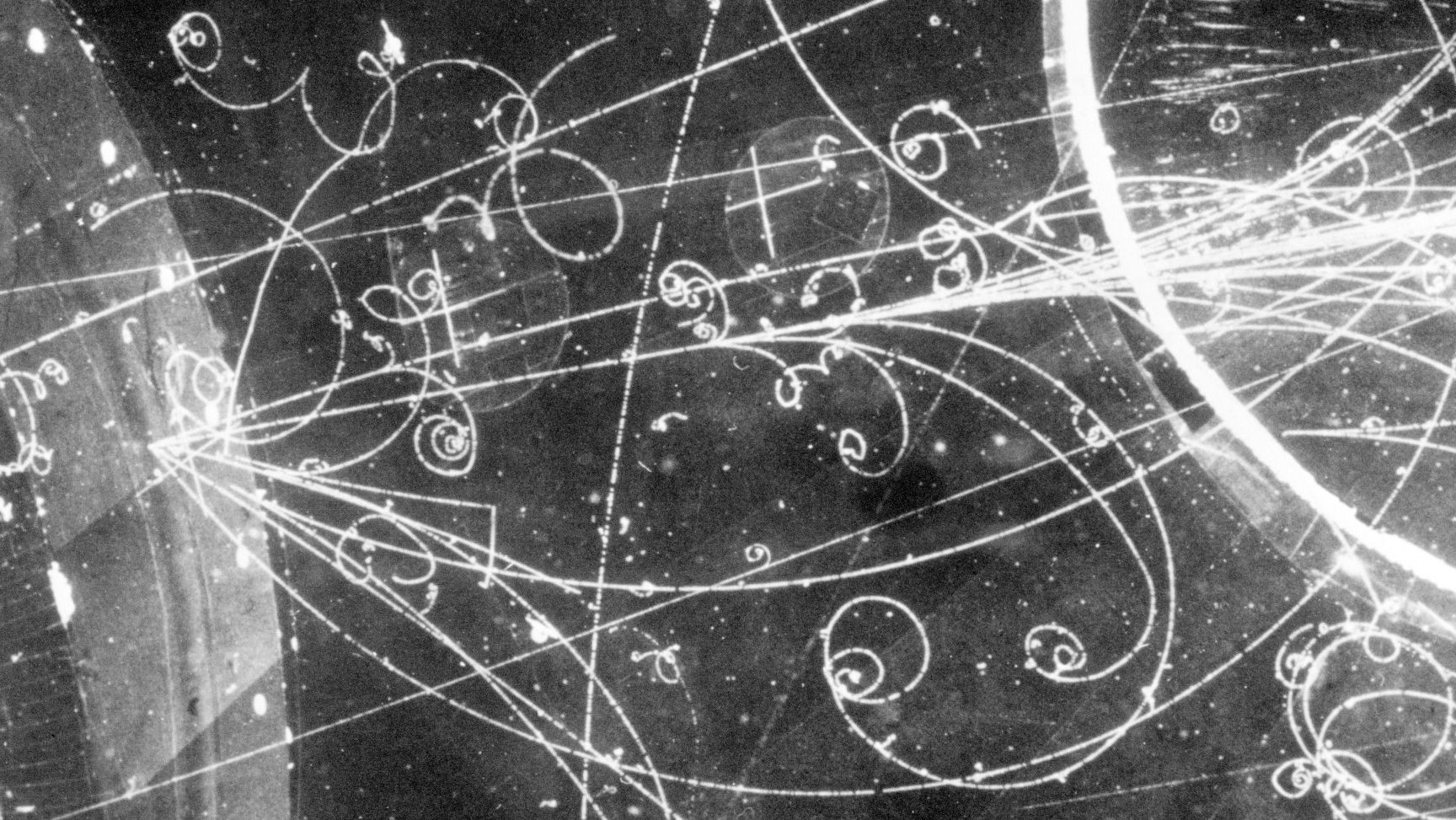
Nobody generates electrons.
The universe appears to disagree with you...

84-0329CN.hr_-1-e1768865707388.jpg
 
Death being equated with justice is a purely religious concept - In the absence of an afterlife, there's no justice in death at all, other than as an end to the suffering of a blameless person.
Ergo, AFTERLIFE!
Yay, afterlife. “I’ll gladly pay you Tuesday for a hamburger today!”
 
But the death penalty can be justice too.
How? A dead person is not aware that he is dead.
So? He knows what’s,happening to him as he goes through it. He took a life. His is forfeit. He is getting what he deserves.
He is getting exactly what all of us get, no matter what we may or may not deserve.

And if it is quick, clean, and fairly painless, he is doing much better than most of us will.

Where's the justice in that?

Death being equated with justice is a purely religious concept - In the absence of an afterlife, there's no justice in death at all, other than as an end to the suffering of a blameless person.
If done right, he’s getting it decades earlier than he otherwise would. Yes, we will all die, and it may not be pleasant. But for the most part, the inmate would much rather live decades more, even knowing what inevitably awaits.
None of which matters. What matters, the only consideration that argues for capital punishment, is the benefit to the rest of mankind of getting rid of a particularly malign individual.
If schadenfreude/justice had anything to do with it, we’d be torturing our victims to death (or for eternity, if we were as powerful and vindictive as God). Instead, we seek “humane means” of ridding ourselves of the undesirable.
Edit/add: supposedly
 
Last edited:
So last night Florida executed someone who wanted to die. He had waived appeals. The man actually killed his cell mate in order to be executed so he wouldn’t spend decades more in prison. His last words? Nannh. I’m good.

Meh. Fine by me.

I pretty much think that anyone sentenced to life in prison should have the option to tap out whenever they want.
 
But the death penalty can be justice too.
How? A dead person is not aware that he is dead.
Justice isn't only for the criminal. It's also for the victims, and in many cases it's for the rest of society as well.

A serial killer isn't being punished to teach them a lesson. They're being imprisoned in part because their actions have forfeited their right to live in a civilized society, and because without a socially implemented punitive system people will resort to vigilantism, and because doing so protects all of the other members of society that would be placed in danger if they were released.
 
Death being equated with justice is a purely religious concept - In the absence of an afterlife, there's no justice in death at all, other than as an end to the suffering of a blameless person.
It depends on who you think the justice is for in the first place.

If you view it only as a means of punishment, with an intent to cause pain and suffering, perhaps you're right. But that's not the only role served by it - it also provides the victims security and a feeling of recompense for their own loss, and it provides security to the rest of society that they will never be at risk.

And while you might disagree, I think it also provides a known cost and clear consequences to potential criminals. It won't prevent all crimes, but it makes it clear that such crimes will face severe consequences - and that may result in at least some people changing their course.
 
So last night Florida executed someone who wanted to die. He had waived appeals. The man actually killed his cell mate in order to be executed so he wouldn’t spend decades more in prison. His last words? Nannh. I’m good.

Meh. Fine by me.

I pretty much think that anyone sentenced to life in prison should have the option to tap out whenever they want.
There is nothing stopping anyone from committing suicide in prison. In this case, this criminal deliberately murdered someone else in order to get the death penalty. That is effed up, and as someone else pointed out up thread, if gives others incentive to commit murder.

IMO, a civilized state does not engage in capital punishment.
 
Death being equated with justice is a purely religious concept - In the absence of an afterlife, there's no justice in death at all, other than as an end to the suffering of a blameless person.
It depends on who you think the justice is for in the first place.

If you view it only as a means of punishment, with an intent to cause pain and suffering, perhaps you're right. But that's not the only role served by it - it also provides the victims security and a feeling of recompense for their own loss, and it provides security to the rest of society that they will never be at risk.

And while you might disagree, I think it also provides a known cost and clear consequences to potential criminals. It won't prevent all crimes, but it makes it clear that such crimes will face severe consequences - and that may result in at least some people changing their course.
So might the alternative of life in prison without parole.
 
"Religious" means it's a concept people believe in because it's a contagious brain parasite, not because they have a reason to think it's correct.
In this particular context, I disagree with your assessment. Or maybe your framing.

You seem to be assuming that because something is captured by religion, it must therefore be wrong and false. I don't think that the case with all of religion. I grant it as true for whether or not an actual conscious deity exists, but there's a whole lot more to religion that just whether or not god is real.

There's a reason that the core concepts of morality tend to be very similar across all religions - it's because they're largely the result of evolution influencing social behavior. Dogs and cats have an innate sense of property ownership, monkeys have a sense of fairness.

Dogs and cats have favorite toys or beds, that they don't allow just anyone else to use. They might choose to share them with others, but for all intents they view them as theirs. My cats had some kind of a discussion as kittens, and ended up with one claiming the head of the bed, one claiming the foot of the bed, and the other somehow being exiled to another room at night (she must have smelled bad, I don't know how they came to this conclusion). If foot-cat ventured to the head of the bed, there was a conflict. We've got friends with multiple dogs, and each has a toy and a bow that is only theirs - the others don't get to use them. If one of the other dogs grabs the "owned" toy, it's going to be an argument until the toy is dropped.

It may not always take the exact same form, but I'm inclined to think that all social animals have some innate sense of justice, appropriate behavior, etc. Religion, in most cases, just cofifies that innate sense.

TLDR: God might be a "contagious brain parasite", but a lot of the fundamental concepts of religion are not.

 
But the death penalty can be justice too.
How? A dead person is not aware that he is dead.
Justice isn't only for the criminal. It's also for the victims, and in many cases it's for the rest of society as well.

A serial killer isn't being punished to teach them a lesson. They're being imprisoned in part because their actions have forfeited their right to live in a civilized society, and because without a socially implemented punitive system people will resort to vigilantism, and because doing so protects all of the other members of society that would be placed in danger if they were released.
The "death" part isn't prerequisite for taking the person out of society. And as a reminder, these crimes are committed regardless that they were illegal and a death penalty was on the table. So while legal codes can help reduce crime, they don't stop it. So the death penalty is more about impacting the criminal's life as much as Constitutionally possible. It is a stamp from society trying to smear justice onto a grave injustice.
Sure. And we put down aggressive pitbulls just to be dickheads too.
 
"Religious" means it's a concept people believe in because it's a contagious brain parasite, not because they have a reason to think it's correct.
In this particular context, I disagree with your assessment. Or maybe your framing.

You seem to be assuming that because something is captured by religion, it must therefore be wrong and false.
I'd say Bomb#20 means the authority behind it is wrong and false. People believe the rules exist and are authorized by an invisible deity and therefore must be obeyed, or Hank will beat your ass (not that obscure I think in these circles)! It isn't relevant if a rule makes sense or not, it is the alleged authority and force of authority that is fake. The comfy black and white the religious may speak of is actually quite gray.
There's a reason that the core concepts of morality tend to be very similar across all religions
What core concepts? In religion there are the rules and the people that you can ignore the rules over.
 
What core concepts? In religion there are the rules and the people that you can ignore the rules over.
Justice, fairness, acceptable behavior, and to some degree property ownership.

As for the people you can ignore the rules over... that holds across social animals too, in many cases. Horse herds will drive other herds off of the grazing areas they've claimed, but will share with other members of their herd. Chimpanzees with attack and kill other troops if they get to close to their territory.

Members of an animal group will punish others of their own group who engage in unacceptable behavior, or who take more than their appropriate share of food. Violence toward members of one's own group is rarely tolerated (some allowable for mating), but violence toward other groups doesn't get met with punishment or ostracization.

Don't kill (your own), Don't steal (from others of your group), Respect others (of your own group) are pretty universal concepts throughout religion, and often are the cornerstones of religious morality. They also happen to be conceptual behavioral patterns that are echoed in varying ways within other social animals.

My opinion is that the concepts predate the development of religion by hundreds of thousands of years... religion codified those concepts.
 
  • Like
Reactions: WAB
Back
Top Bottom