• Welcome to the Internet Infidels Discussion Board.

2028 Presidential Election

It seems that some people simply cannot understand the concept of "that which exists as a brute truth without need to explain why or how" is one with both utility and need for its own word.

It reminds me of a couple idiots sitting on their couch, doing nothing but occasionally acting as public menaces, chuckling and thinking someone else is the idiot.
pedantry
/ˈped(ə)ntrē/
Pedantry refers to an excessive concern with minor details, formal rules, or displaying academic learning. Someone who acts this way (a pedant) often prioritizes strict adherence to technicalities over common sense, context, or the broader meaning of a conversation. [1, 2, 3]

Key Characteristics
  • The "Well, Actually..." Factor: Constantly correcting others on trivial grammar points, technicalities, or unimportant facts.
  • Overly Formal: Applying rigid academic or traditional rules to casual situations.
  • Lost in the Weeds: Getting so caught up in small specifics that the main goal or message is ignored.
  • Ostentatious Learning: Showing off knowledge in a way that feels inappropriate, boastful, or condescending
There's a reason I left it in a spoiler, so as to not actually criticize anything else.

I find a good deal of pedantry is important to people who want to be precise in their understanding of things.

It's something I get my panties in a bunch because, believe it or not, misuse of the idea bleeds back into the peripheries of philosophical discussions where people confuse ideas broadly.

You know I think Trump is absurdly immoral; I just think it's important to point out that there are no moral absurdities generated by Trump. All his absurdities are absurdly immoral.

:P
 
It seems that some people simply cannot understand the concept of "that which exists as a brute truth without need to explain why or how" is one with both utility and need for its own word.

It reminds me of a couple idiots sitting on their couch, doing nothing but occasionally acting as public menaces, chuckling and thinking someone else is the idiot.
pedantry
/ˈped(ə)ntrē/
Pedantry refers to an excessive concern with minor details, formal rules, or displaying academic learning. Someone who acts this way (a pedant) often prioritizes strict adherence to technicalities over common sense, context, or the broader meaning of a conversation. [1, 2, 3]

Key Characteristics
  • The "Well, Actually..." Factor: Constantly correcting others on trivial grammar points, technicalities, or unimportant facts.
  • Overly Formal: Applying rigid academic or traditional rules to casual situations.
  • Lost in the Weeds: Getting so caught up in small specifics that the main goal or message is ignored.
  • Ostentatious Learning: Showing off knowledge in a way that feels inappropriate, boastful, or condescending
Non-Americans: just in case you're wondering how we all got into all this mess with Bush and Trump, this notion of seeing the correct use of words as inherently pedantic is an extremely common perspective... 'ware! Don't let them defund education to save on the natoonal budget, it all goes downhill generationally from there.
 
 
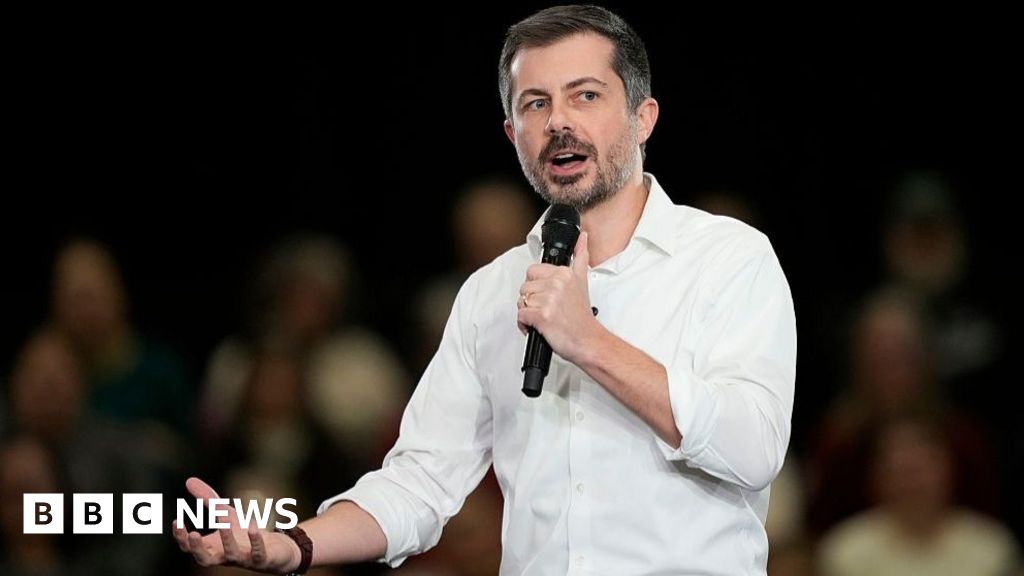
Pete Buttigieg, the former US transportation secretary, has revealed he was forced to spend a night away from his children because of an anonymous allegation against him, which police say they later determined to be false.

Michigan State Police found no evidence to substantiate the claim and believed it was politically motivated, the Democrat said.

After receiving an anonymous report that he posed a danger to his children, the police arranged forensic interviews for his four-year-old twins and notified him that he could not be alone with the children until interviews were conducted, he said.

Michigan State Police told the BBC the anonymous allegation against Buttigieg was false.
 
How does eligibility to be president actually work i.e. what does

"No Person except a natural born Citizen, or a Citizen of the United States, at the time of the Adoption of this Constitution, shall be eligible to the Office of President; neither shall any Person be eligible to that Office who shall not have attained to the Age of thirty five Years, and been fourteen Years a Resident within the United States."​

actually mean?
All presidents prior to Van Buren were born when the US was a British colony and their parents were most likely British citizens. Certainly not Americans. Yet no one doubts their qualification to be president. (and yes it is in the past so who cares anyway?)
Has it ever been tested i.e. go to your Supreme Court, and determine what exactly does it mean?
With the current dearth of plausible presidential candidates a lot of potential candidates are disqualified because they were born outside the US yet are citizens. Seems a waste of possible talent ands ability.

If this has be discussed previously then please link.
 
  • The "Well, Actually..." Factor: Constantly correcting others on trivial grammar points, technicalities, or unimportant facts.
  • Overly Formal: Applying rigid academic or traditional rules to casual situations.
  • Lost in the Weeds: Getting so caught up in small specifics that the main goal or message is ignored.
  • Ostentatious Learning: Showing off knowledge in a way that feels inappropriate, boastful, or condescending
So we're supposed to buy in to a list of sentence fragments? Back to school!
 
How does eligibility to be president actually work i.e. what does

"No Person except a natural born Citizen, or a Citizen of the United States, at the time of the Adoption of this Constitution, shall be eligible to the Office of President; neither shall any Person be eligible to that Office who shall not have attained to the Age of thirty five Years, and been fourteen Years a Resident within the United States."​

actually mean?
All presidents prior to Van Buren were born when the US was a British colony and their parents were most likely British citizens. Certainly not Americans. Yet no one doubts their qualification to be president. (and yes it is in the past so who cares anyway?)
Has it ever been tested i.e. go to your Supreme Court, and determine what exactly does it mean?
With the current dearth of plausible presidential candidates a lot of potential candidates are disqualified because they were born outside the US yet are citizens. Seems a waste of possible talent ands ability.

If this has be discussed previously then please link.
Anyone born within the borders of what became the USA on its inception is a "Natural born citizen" regardless of parentage.

That's also why "anchor babies" are a thing. Have a baby in the US, even if you are only in the US for long enough to give birth, and that baby is a US citizen and eligible to the office of President once they attain the age of thirty five.

George Washington, for example, was born in Virginia, which was a part of the USA once a USA existed to be a part of. His eligibility was established by the now redundant clause:

or a Citizen of the United States, at the time of the Adoption of this Constitution​

No such citizens still live; But while they did, they were eligible.

What constituted US citizenship at the time of adoption of the constitution is unclear, but generally citizenship of one of the states seems to have been the criterion.

Perhaps Charles III might have standing to bring a case to SCOTUS that George Washington was ineligible, but it seems highly unlikely that he could win - or that winning would change anything today.
 
Last edited:
How does eligibility to be president actually work i.e. what does

"No Person except a natural born Citizen, or a Citizen of the United States, at the time of the Adoption of this Constitution, shall be eligible to the Office of President; neither shall any Person be eligible to that Office who shall not have attained to the Age of thirty five Years, and been fourteen Years a Resident within the United States."​

actually mean?
All presidents prior to Van Buren were born when the US was a British colony and their parents were most likely British citizens. Certainly not Americans. Yet no one doubts their qualification to be president. (and yes it is in the past so who cares anyway?)
Has it ever been tested i.e. go to your Supreme Court, and determine what exactly does it mean?
With the current dearth of plausible presidential candidates a lot of potential candidates are disqualified because they were born outside the US yet are citizens. Seems a waste of possible talent ands ability.

If this has be discussed previously then please link.
Anyone born within the borders of what became the USA on its inception is a "Natural born citizen" regardless of parentage.

That's also why "anchor babies" are a thing. Have a baby in the US, even if you are only in the US for long enough to give birth, and that baby is a US citizen and eligible to the office of President once they attain the age of thirty five.

George Washington, for example, was born in Virginia, which was a part of the USA once a USA existed to be a part of. His eligibility was established by the now redundant clause:

or a Citizen of the United States, at the time of the Adoption of this Constitution​

No such citizens still live; But while they did, they were eligible.

There was a bit of scuttlebutt about John McCain running for president because he was born on an overseas US military base to two US citizens. The US consideres that a US citizen but some people with iron rakes up their asses may have made an issue of it.
 
Does that means that someone who was not born on US soil be it, a colony, military base or US territory but has become a US citizen is not eligible for presidential consideration?
 
How does eligibility to be president actually work i.e. what does

"No Person except a natural born Citizen, or a Citizen of the United States, at the time of the Adoption of this Constitution, shall be eligible to the Office of President; neither shall any Person be eligible to that Office who shall not have attained to the Age of thirty five Years, and been fourteen Years a Resident within the United States."​

actually mean?
All presidents prior to Van Buren were born when the US was a British colony and their parents were most likely British citizens. Certainly not Americans. Yet no one doubts their qualification to be president. (and yes it is in the past so who cares anyway?)
Has it ever been tested i.e. go to your Supreme Court, and determine what exactly does it mean?
With the current dearth of plausible presidential candidates a lot of potential candidates are disqualified because they were born outside the US yet are citizens. Seems a waste of possible talent ands ability.

If this has be discussed previously then please link.
Anyone born within the borders of what became the USA on its inception is a "Natural born citizen" regardless of parentage.

That's also why "anchor babies" are a thing. Have a baby in the US, even if you are only in the US for long enough to give birth, and that baby is a US citizen and eligible to the office of President once they attain the age of thirty five.

George Washington, for example, was born in Virginia, which was a part of the USA once a USA existed to be a part of. His eligibility was established by the now redundant clause:

or a Citizen of the United States, at the time of the Adoption of this Constitution​

No such citizens still live; But while they did, they were eligible.

There was a bit of scuttlebutt about John McCain running for president because he was born on an overseas US military base to two US citizens. The US consideres that a US citizen but some people with iron rakes up their asses may have made an issue of it.
Didn't Obama have some talk of his ineligibility because his father was Kenyan?
Only among liars and idiots like Trump. Obama was born a US citizen in Hawaii.
 
Does that means that someone who was not born on US soil be it, a colony, military base or US territory but has become a US citizen is not eligible for presidential consideration?
Anyone morn of a US citizen is a US citizen
So naturalised yanks, sorry citizens, need not apply?
 
  • The "Well, Actually..." Factor: Constantly correcting others on trivial grammar points, technicalities, or unimportant facts.
  • Overly Formal: Applying rigid academic or traditional rules to casual situations.
  • Lost in the Weeds: Getting so caught up in small specifics that the main goal or message is ignored.
  • Ostentatious Learning: Showing off knowledge in a way that feels inappropriate, boastful, or condescending
So we're supposed to buy in to a list of sentence fragments? Back to school!
It was a response to yet another bad faith nonsense comment by someone who refuses to acknowledge a well known reality. It's nonsense word play by someone's who's been cornered like a cartoon rat and has to escape through the arched rodent door in the baseboard.
 
How does eligibility to be president actually work i.e. what does

"No Person except a natural born Citizen, or a Citizen of the United States, at the time of the Adoption of this Constitution, shall be eligible to the Office of President; neither shall any Person be eligible to that Office who shall not have attained to the Age of thirty five Years, and been fourteen Years a Resident within the United States."​

actually mean?
All presidents prior to Van Buren were born when the US was a British colony and their parents were most likely British citizens. Certainly not Americans. Yet no one doubts their qualification to be president. (and yes it is in the past so who cares anyway?)
Has it ever been tested i.e. go to your Supreme Court, and determine what exactly does it mean?
With the current dearth of plausible presidential candidates a lot of potential candidates are disqualified because they were born outside the US yet are citizens. Seems a waste of possible talent ands ability.

If this has be discussed previously then please link.
Anyone born within the borders of what became the USA on its inception is a "Natural born citizen" regardless of parentage.

That's also why "anchor babies" are a thing. Have a baby in the US, even if you are only in the US for long enough to give birth, and that baby is a US citizen and eligible to the office of President once they attain the age of thirty five.

George Washington, for example, was born in Virginia, which was a part of the USA once a USA existed to be a part of. His eligibility was established by the now redundant clause:

or a Citizen of the United States, at the time of the Adoption of this Constitution​

No such citizens still live; But while they did, they were eligible.

What constituted US citizenship at the time of adoption of the constitution is unclear, but generally citizenship of one of the states seems to have been the criterion.

Perhaps Charles III might have standing to bring a case to SCOTUS that George Washington was ineligible, but it seems highly unlikely that he could win - or that winning would change anything today.
This also granted citizenship to formerly enslaved persons.
 
Does that means that someone who was not born on US soil be it, a colony, military base or US territory but has become a US citizen is not eligible for presidential consideration?
Anyone morn of a US citizen is a US citizen
This specific rule was made to ensure offspring of US diplomats stationed overseas were born US citizens even if they were not born in the US. It applies in other circumstances when a US citizen or their wife might give birth overseas/out of US borders.

The offspring born to foreign diplomats serving in the US are specifically excluded from being natural born citizens.
 
Back
Top Bottom