

- Joined
- Oct 22, 2002
- Messages
- 50,507
- Location
- Frozen in Michigan
- Gender
- Old Fart
- Basic Beliefs
- Don't be a dick.
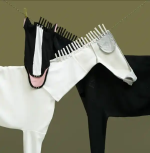
More laundry art.

Maybe in Trump's Gulf of America. Or at least become a registered Republican.
Former motorcycle rider here. I never gave the question much thought back in my riding days (over 40 years ago), but answer D begs the question of why then, are we moving away from MT on cars to almost exclusively AT? Wouldn't the same philosophy apply if its a 4 wheel vehicle? I asked AI the question and it gave several answers (mostly related to practical limitations, like size, weight, etc), none of which were answer D.Speaking of Tests
I wanted to get a motorcycle endorsement on my driver’s license, and in Pennsylvania the method was to take a class from the Motorcycle Safety Foundation. Each class had three two-hour classroom sessions and three one-hour riding sessions. The classroom sessions concluded with a written test and the riding session concluded with riding test. Pass both and you received your endorsement.
During the first classroom session, in between video safety shorts, one of the instructors asked almost off-handedly, “why do motorcycles have clutch-type transmissions?”. This engendered a lot of responses like, “for fuel efficiency”, and “automatic transmissions are too expensive”, and “it’s more fun”. The instructor nodded, acknowledged each answer in turn, but said, “yeah, those are all good, but there is better reason”. Then he let it drop and he started the next video safety short. This was repeated at the end of the mid-class break during the second week. There were more offerings from us students and the same response, “yeah, but there is better reason”, but no further explanation.
At the end of the final classroom session it was time for the multiple-choice test. I start and I think that I am doing pretty well, I feel prepared. Then I get to this:
10. Why do motorcycles have clutch-type transmissions?
A. For fuel efficiency.
B. Keep engine costs affordable.
C. To rev the engine at traffic lights.
D. So that the engine speed matches the road speed.
Well dang. I’m going with D. I finish and turn in my exam which was graded right as I stood there in front of the instructor. He marks question 10 correct, and winks at me. Perfect score I pass. Turns out that for years no one got a perfect score, most often stumbling over question 10 . . . .

Because people prefer them. Not enough people want them to make it economical to keep producing manual gearboxes.Former motorcycle rider here. I never gave the question much thought back in my riding days (over 40 years ago), but answer D begs the question of why then, are we moving away from MT on cars to almost exclusively AT? Wouldn't the same philosophy apply if its a 4 wheel vehicle? I asked AI the question and it gave several answers (mostly related to practical limitations, like size, weight, etc), none of which were answer D.Speaking of Tests
I wanted to get a motorcycle endorsement on my driver’s license, and in Pennsylvania the method was to take a class from the Motorcycle Safety Foundation. Each class had three two-hour classroom sessions and three one-hour riding sessions. The classroom sessions concluded with a written test and the riding session concluded with riding test. Pass both and you received your endorsement.
During the first classroom session, in between video safety shorts, one of the instructors asked almost off-handedly, “why do motorcycles have clutch-type transmissions?”. This engendered a lot of responses like, “for fuel efficiency”, and “automatic transmissions are too expensive”, and “it’s more fun”. The instructor nodded, acknowledged each answer in turn, but said, “yeah, those are all good, but there is better reason”. Then he let it drop and he started the next video safety short. This was repeated at the end of the mid-class break during the second week. There were more offerings from us students and the same response, “yeah, but there is better reason”, but no further explanation.
At the end of the final classroom session it was time for the multiple-choice test. I start and I think that I am doing pretty well, I feel prepared. Then I get to this:
10. Why do motorcycles have clutch-type transmissions?
A. For fuel efficiency.
B. Keep engine costs affordable.
C. To rev the engine at traffic lights.
D. So that the engine speed matches the road speed.
Well dang. I’m going with D. I finish and turn in my exam which was graded right as I stood there in front of the instructor. He marks question 10 correct, and winks at me. Perfect score I pass. Turns out that for years no one got a perfect score, most often stumbling over question 10 . . . .

But you would get to the bottom fairly quickly.Really now, 4 days??The real journey is a lot further. But not ten years further; More like three times as far.
On foot plus ferry it's less than a week, if you pay attention to any "Gods and Monsters Alerts" from the weather service before setting out.
View attachment 54790
5 miles/hour is a pretty energetic walk and you're going to maintain it for that long??
(Well, at least it's better than when I was doing some mapping about the Grand Canyon--it showed a bike time that made no sense. (Um, it's the Grand Canyon. Way too big to bridge, you cross it on foot (if you're on a mule the mule is on it's feet) or you go to one of the bridges at the ends--hundreds of miles away.) Examining it--very short bike distance, then walk your bike along the trail. But it assumed bicycle speed despite walking it. (Which would be flat out suicide. You would fail to handle a turn and go over the edge.)

It’s the matter if then having to bicycle UP the other side, with every bone in your body broken.But you would get to the bottom fairly quickly.Really now, 4 days??The real journey is a lot further. But not ten years further; More like three times as far.
On foot plus ferry it's less than a week, if you pay attention to any "Gods and Monsters Alerts" from the weather service before setting out.
View attachment 54790
5 miles/hour is a pretty energetic walk and you're going to maintain it for that long??
(Well, at least it's better than when I was doing some mapping about the Grand Canyon--it showed a bike time that made no sense. (Um, it's the Grand Canyon. Way too big to bridge, you cross it on foot (if you're on a mule the mule is on it's feet) or you go to one of the bridges at the ends--hundreds of miles away.) Examining it--very short bike distance, then walk your bike along the trail. But it assumed bicycle speed despite walking it. (Which would be flat out suicide. You would fail to handle a turn and go over the edge.)
I imagine that it is shorthand for saying that there is a fixed ratio between RPM produced by the engine and the road speed (taking into account which gear motor is in).D is gibberish to my ears. Say the road speed is sixty miles an hour. What is the engine speed?

But, since that is also what automatic transmissions do, I don't see how that can be an answer to the question.I imagine that it is shorthand for saying that there is a fixed ratio between RPM produced by the engine and the road speed (taking into account which gear motor is in).D is gibberish to my ears. Say the road speed is sixty miles an hour. What is the engine speed?

I sure hope the engine is moving at the same speed! That’s gonna hurt if it isn’t.D is gibberish to my ears. Say the road speed is sixty miles an hour. What is the engine speed?
I think that's right. Up until 2014, all my vehicles had MT. I was a little hesistant to go with an AT on my current truck, but I can't see going back to MT at this point. I've gotten lazy. On motorcycles, shifting gears is a lot easier than with a car. Just a squeeze of the left hand and a toe tip with the right foot. It becomes an unconcious effort at some point. No need to move the whole leg and arm to shift, like a MT car.Because people prefer them. Not enough people want them to make it economical to keep producing manual gearboxes.Former motorcycle rider here. I never gave the question much thought back in my riding days (over 40 years ago), but answer D begs the question of why then, are we moving away from MT on cars to almost exclusively AT? Wouldn't the same philosophy apply if its a 4 wheel vehicle? I asked AI the question and it gave several answers (mostly related to practical limitations, like size, weight, etc), none of which were answer D.Speaking of Tests
I wanted to get a motorcycle endorsement on my driver’s license, and in Pennsylvania the method was to take a class from the Motorcycle Safety Foundation. Each class had three two-hour classroom sessions and three one-hour riding sessions. The classroom sessions concluded with a written test and the riding session concluded with riding test. Pass both and you received your endorsement.
During the first classroom session, in between video safety shorts, one of the instructors asked almost off-handedly, “why do motorcycles have clutch-type transmissions?”. This engendered a lot of responses like, “for fuel efficiency”, and “automatic transmissions are too expensive”, and “it’s more fun”. The instructor nodded, acknowledged each answer in turn, but said, “yeah, those are all good, but there is better reason”. Then he let it drop and he started the next video safety short. This was repeated at the end of the mid-class break during the second week. There were more offerings from us students and the same response, “yeah, but there is better reason”, but no further explanation.
At the end of the final classroom session it was time for the multiple-choice test. I start and I think that I am doing pretty well, I feel prepared. Then I get to this:
10. Why do motorcycles have clutch-type transmissions?
A. For fuel efficiency.
B. Keep engine costs affordable.
C. To rev the engine at traffic lights.
D. So that the engine speed matches the road speed.
Well dang. I’m going with D. I finish and turn in my exam which was graded right as I stood there in front of the instructor. He marks question 10 correct, and winks at me. Perfect score I pass. Turns out that for years no one got a perfect score, most often stumbling over question 10 . . . .


And automatics have been getting better and better.Not enough people want them to make it economical to keep producing manual gearboxes.
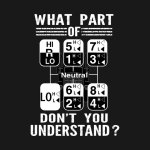
That's certainly not the case in the UK.I see Lexus is advertising a car that still has a MT.
Looks like that one Lexus and BMW and Porsche are the only mainstream marques to still sell cars with manual transmissions.
I know if my BMW had a MT it would be worth several thousand dollars more than it is.